Polymarket Elections Guide 2026
 Gadi Eizenkot45%YesNo
 Benjamin Netanyahu34%YesNoGadi Eizenkot91%YesNoBenjamin Netanyahu10%YesNo

 Together66%YesNo
 Yashar61%YesNo



 Chiang Wan-an62%YesNo
 Puma Shen38%YesNo
Israel election 2026: the seat markets resolved, the prime minister market is open
As of November 2, 2026, 3:52 AM Israel time (01:52 UTC), Polymarket has resolved the seat markets on Israel's October 27 Knesset election, and the question of who becomes prime minister is still open. In the Central Elections Committee's final count, Benjamin Netanyahu's Likud is the largest party with 27 of 120 seats, the Netanyahu bloc has 53 and the opposition bloc 48, so neither has the 61 needed for a majority. On October 31 (UTC), Polymarket resolved the largest-party market to Likud, the Likud seats market to the 25 to 29 bracket and the bloc market to the Netanyahu bloc. In the prime minister market at 01:52 UTC on November 2, Gadi Eisenkot was at 42.7% to be sworn in and Netanyahu at 35.5%, because the next step is a coalition, not the count.
This is not a poll based on recognized statistical methods. Prices are set by traders on Polymarket and do not show public opinion or voting patterns. They express an estimate of probability, not voting intention: a 60% price does not mean 60% of voters back that outcome. Market prices are not a poll and do not represent a poll, and they are separate from the exit polls and the official count below.
November 2, 2026 update: consultations start on November 4
The count is unchanged since the committee published it at about 12:50 AM Israel time on October 30 (Times of Israel, Israel National News): Likud 27, Yashar 21, Together 12, Joint List 11, The Democrats 8, Ra'am 8, Yisrael Beiteinu 7, United Torah Judaism 7, Otzma Yehudit 7, Shas 6 and Religious Zionism 6. Likud won 20.5% of the vote and Yashar 16.1% (France 24, The National). Turnout was 77.9%, and the Reservists (2.7%) and Amcha Yisrael (1.7%) fell short of the 3.25% threshold.
Latest developments (November 2, 2026). President Isaac Herzog is due to receive the official results from the committee chair, Justice Noam Sohlberg, on Wednesday, November 4, and to begin consultations with the lists elected to the 26th Knesset the same day at the President's Residence, broadcast live (Haaretz, Times of Israel). They are expected to run into Thursday and possibly Friday (ynet). He has seven days from publication of the results to give the mandate, so by November 11 at the latest (ynet), and the new Knesset is due to be sworn in on November 10. On November 1 Herzog told party leaders to "stop climbing trees" and to look for "creative solutions to prevent another election" (Times of Israel, Israel National News).
The same day Naftali Bennett's Together said it will recommend Eisenkot (Jerusalem Post), and a senior Joint List official said the Joint List and Ra'am are expected to do the same (Jerusalem Post, citing Walla). Ynet's tally is 60 recommendations for Eisenkot (Yashar, Together, The Democrats, the Joint List and Ra'am) and 46 for Netanyahu (Likud, Otzma Yehudit, Shas and Religious Zionism). Yisrael Beiteinu and United Torah Judaism, 14 seats between them, are uncommitted: Avigdor Lieberman has not said whom he will recommend and was expected to speak after his faction's meeting on Monday, November 2 (ynet), and UTJ's likely option is to recommend nobody (i24NEWS, citing Maariv). Recommendations are not coalition commitments, and the President is not legally required to pick the candidate with the most (ynet). Anti-Netanyahu parties plan to replace Knesset Speaker Amir Ohana soon after the swearing-in (Times of Israel, ynet).
On November 1 Sohlberg, appearing with Israel Security Agency chief David Zini and Attorney General Gali Baharav-Miara, said the vote was conducted properly and the results "reflect the will of the voters", and that the review of suspected foreign funding continues (Times of Israel, The New Arab). Likud called it premature to rule out an effect on the results and said "a dark cloud" hangs over them until the probe is finished (Israel National News, Times of Israel).
The coalition math. Netanyahu's bloc is eight seats short, and the lists that could add them ran on replacing him: Eisenkot has ruled out serving under Netanyahu, even in a rotation deal (Times of Israel, JNS), and Likud's whip, Ofir Katz, has rejected rotation too (Times of Israel). Lieberman says he will not serve with Netanyahu (i24NEWS), and the Joint List and Netanyahu's bloc have ruled each other out (Arab News, Times of Israel). The opposition bloc is 13 short. The Joint List and Ra'am, with 19 seats, would take it to 67, but Avigdor Lieberman has rejected even outside support from Arab parties (Times of Israel, i24NEWS), and without his 7 seats the total is 60 (our arithmetic from the count). The other route is the ultra-Orthodox lists: Shas and United Torah Judaism, 13 seats between them, said on October 29 that they would negotiate over joining an Eisenkot-led government (ynet), and Shas rabbi Moshe Maya said on November 1 there is "no reason to rule out coalition negotiations" with him (Jerusalem Post, i24NEWS). Their demand for a law exempting yeshiva students from military service clashes with Eisenkot's stated priority, a government "committed to military conscription" (ynet). Analysts quoted by the Times of Israel name a unity government and another election as the other outcomes. That is why the prime minister market can stay open for weeks: it resolves only when someone is sworn in. The other open Israel markets are on the Polymarket Israel page.
Israel elects 120 Knesset members by nationwide proportional representation, with a 3.25% threshold and a 61-seat majority line. Within seven days of the official results, the President consults the elected lists and gives one member the mandate to form a government, with 28 days plus up to 14 more. A government takes office only after a Knesset confidence vote. The Central Elections Committee requires anyone who publishes Polymarket prices on the election to state next to them that they are not a poll based on recognized statistical methods.
The Israel election markets: what resolved and what is still open
Resolved on October 31, 2026. Polymarket resolved three seat markets on October 31 (UTC), before the official results go to the President: the largest-party market to Likud (about $17.0 million traded), the Likud seats market to the 25 to 29 bracket (about $8.6 million) and the bloc market to "Bibi", the Netanyahu bloc (about $294,000). The separate market on whether either named bloc reaches 61 seats resolved No. The day before the vote, on October 26 (02:12 UTC), traders had priced Yashar at 69.5% to win the most seats and the opposition bloc at 57% to win more seats; the count went the other way. This is not a poll based on recognized statistical methods: those were prices set by traders.
Next prime minister. The biggest market, with about $83.6 million traded by November 2, resolves to whoever is sworn in as prime minister after the election. A caretaker term does not count, so it can stay open for weeks or months. If nobody is sworn in by December 31, 2027, it resolves to "Other".
This is not a poll based on recognized statistical methods. Prices are set by traders on Polymarket and do not show public opinion or voting patterns. A 60% price does not mean 60% of voters back that outcome.
First mandate. Who the President formally tasks first with forming a government. Party recommendations and consultations do not count. At 01:52 UTC on November 2 it priced Eisenkot at 83% and Netanyahu at 17%, after 69% and 30.5% on November 1 (02:00 UTC). This is not a poll based on recognized statistical methods.
When a government is formed. Each date is a separate Yes or No question on whether a new government is sworn in before the Knesset by that date, so the prices rise with the date and do not add up to 100%. A caretaker government does not count. At 01:52 UTC on November 2: November 30, 2026 at 2.3%, December 31, 2026 at 21.5%, February 28, 2027 at 58% and June 30, 2027 at 76.5%. This is not a poll based on recognized statistical methods.
Parties in the next government. A party counts only if it holds at least one minister's post in the first government formed after the election; outside support does not count. Each party is its own Yes or No question. At 01:52 UTC on November 2, Together was at 68%, Yashar at 56.5% and Likud at 42.5%. This is not a poll based on recognized statistical methods.
Election annulled? Yes only if the October 27 results are formally declared invalid by the Central Elections Committee, the Supreme Court or another official body with jurisdiction by December 31, 2026. At 01:52 UTC on November 2, Yes was at 3.4%. This is not a poll based on recognized statistical methods.
This is not a poll based on recognized statistical methods: every figure in these boxes is a price set by traders. The largest party does not necessarily form the government. The Israel markets beyond the election are on the Polymarket Israel page.
US midterms on November 3, 2026: what the balance of power market prices
The United States votes on Tuesday, November 3, 2026, with all 435 House seats and 35 Senate seats on the ballot. Republicans hold the Senate 53 to 47, and Democrats need a net gain of four Senate seats and three House seats for control (NBC News). The first polls close at 6 PM Eastern in parts of Kentucky and Indiana, the last at 1 AM Eastern (Fox News). No votes have been counted yet.
Polymarket's balance of power market combines both chambers into five outcomes. At 01:52 UTC on November 2, "Democrats Sweep" was priced at 70.5%, "R Senate, D House" at 23.5%, "Republicans Sweep" at 5.5% and "D Senate, R House" at 0.55%, after 71.5%, 23.5%, 4.5% and 0.55% on November 1 (02:00 UTC). About $51.3 million had been traded on it. In the single-chamber markets, Democrats were at 71.5% for the Senate and 94.5% for the House. A party controls a chamber with a majority of its voting seats; in a 50 to 50 Senate, control goes to the party that holds the Vice Presidency. A runoff decides its seat even if it falls after November, and the market can stay open to January 4 if an independent's caucus choice is unclear, so it need not resolve on election night. Race-by-race markets are on the US midterms page.
Election markets worldwide
Beyond Israel and the midterms, this page collects election markets from around the world: the 2028 US presidential race, primaries, congressional races and European votes. Next on the calendar is Taiwan's local elections on November 28, 2026, including the Taipei mayor race between the incumbent, Chiang Wan-an of the Kuomintang, and Puma Shen of the Democratic Progressive Party (Focus Taiwan). In every one, the price is a traders' probability estimate, not a poll result.

 Mike Mazzei (R)89%YesNo
 Cyndi Munson (D)10%YesNo
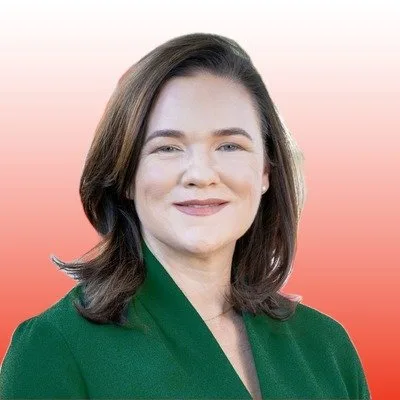 Alex Mealer (R)73%YesNo
 Leticia Gutierrez (D)27%YesNo
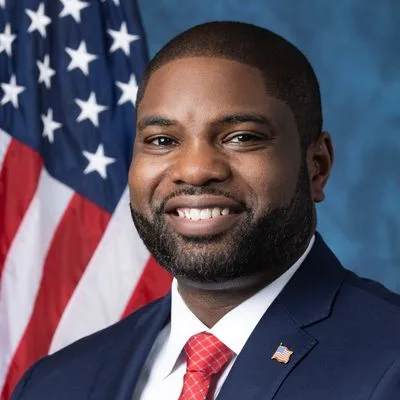 Donalds 0-3%26%YesNo
 Jolly 0-3%24%YesNo
 Mike Turner (R)71%YesNo
 Kristina Knickerbocker (D)30%YesNo

 Sam Forstag (D)59%YesNo
 Aaron Flint (R)41%YesNo

 Anthony Constantino (R)71%YesNo
 Blake Gendebien (D)29%YesNo

 Javier Milei46%YesNo
 Axel Kicillof29%YesNo
 Paul LePage (R)60%YesNo
 Matthew Dunlap (D)39%YesNo
 Moody 0-3%22%YesNoMoody 3-6%21%YesNo
 Derek Schmidt (R)79%YesNo
 Don Coover (D)22%YesNo
 Dan Green (R)62%YesNo
 Darren Soto (D)38%YesNo
 Masterson 0-3%32%YesNoMasterson 3-6%21%YesNo
 Kelly Ayotte (R)85%YesNo
 Cinde Warmington (D)14%YesNo

 Ryan Elijah (R)65%YesNo
 Bale Dalton (D)35%YesNo
 Iowa26%YesNo
 South Carolina18%YesNo
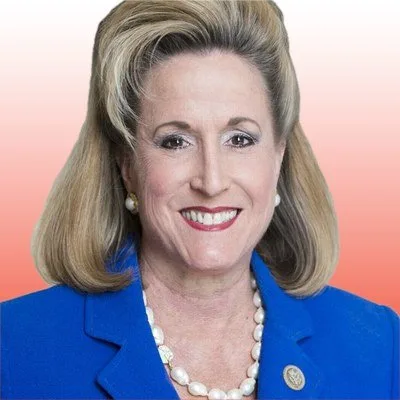 Ann Wagner (R)60%YesNo
 Fred Wellman (D)42%YesNo

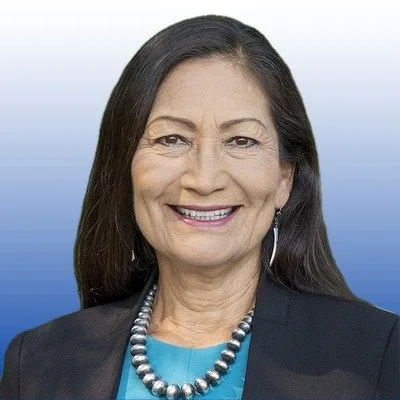 Deb Haaland (D)96%YesNo
 Gregg Hull (R)4%YesNo

 Tommy Tuberville (R)93%YesNo
 Doug Jones (D)7%YesNo
 Brent Taylor (R)78%YesNo
 Justin Pearson (D)23%YesNo

 Johnny Chiang81%YesNo
 Ho Hsin-chun20%YesNo
 Jim Pillen (R)90%YesNo
 Lynne Walz (D)11%YesNo

 Democrats 8-10%27%YesNo
 Democrats 10-12%25%YesNo
 Stefany Shaheen (D)95%YesNo
 Anthony DiLorenzo (R)5%YesNo

 Joe Wilson (R)90%YesNo
 Zyon Khalifa (D)10%YesNo
 Jared Moskowitz (D)84%YesNo
 Scott Singer (R)16%YesNo

 Andy Harris (R)88%YesNo
 Dan Schwartz (D)12%YesNo


 Amy Klobuchar (D)97%YesNo
 Lisa Demuth (R)3%YesNo
 Brown 3-6%26%YesNoBrown 0-3%19%YesNo

 Eli Crane (R)55%YesNo
 Jonathan Nez (D)44%YesNo
 Cooper 18%+24%YesNoCooper 15-18%24%YesNo
 Democrat 6-9%24%YesNoDemocrat 0-3%20%YesNo


 Anna Paulina Luna (R)69%YesNo
 Leela Gray (D)32%YesNo
 James Uthmeier (R)73%YesNo
 José Javier Rodriguez (D)25%YesNo

 Radomir Saičić78%YesNo
 Vladan Đokić12%YesNo

 Rafael López Aliaga68%YesNo
 Francis James Allison Oyague3%YesNo
Polymarket elections FAQ
Who won the Israel election 2026?
Likud won the most seats, 27 of 120, in the Central Elections Committee's final count, published early on October 30, 2026, and Polymarket resolved its largest-party market to Likud on October 31. Neither bloc has 61: the Netanyahu bloc has 53 seats, the opposition bloc 48 and the Arab-led lists 19. The official results go to the President on November 4, and the prime minister is decided later, by coalition talks and a Knesset confidence vote.
Israel election results 2026: what does the final count show?
In the Central Elections Committee's final count, published at about 12:50 AM Israel time on October 30, 2026: Likud 27, Yashar 21, Together 12, Joint List 11, The Democrats 8, Ra'am 8, Yisrael Beiteinu 7, United Torah Judaism 7, Otzma Yehudit 7, Shas 6 and Religious Zionism 6. Netanyahu bloc 53, opposition bloc 48, Arab-led lists 19. Turnout was 77.9%. On election night the 10 PM exit polls had the opposition bloc two or three seats ahead; the count reversed that. The figures were unchanged as of November 2, and the official results go to the President on November 4.
What did Polymarket predict for the Israel election?
Polymarket runs several markets on the October 27, 2026 Knesset election: next prime minister, largest party, Likud seat count and which bloc wins more seats. On October 26, 2026 (02:12 UTC), the day before the vote, the prime minister market priced Gadi Eisenkot at 50.4%, Benjamin Netanyahu at 26.5% and Naftali Bennett at 12.5%, and Yashar was at 69.5% to win the most seats. The count went the other way: on October 31 the largest-party market resolved to Likud and the bloc market to the Netanyahu bloc. On November 2 (01:52 UTC), Eisenkot was at 42.7% and Netanyahu at 35.5% to be sworn in. This is not a poll based on recognized statistical methods: in each market the price is a traders' probability estimate.
Are Polymarket prices a poll?
No. This is not a poll based on recognized statistical methods. Prices are set by traders on Polymarket and do not show public opinion or voting patterns. A 60% price means traders see about a 60% chance of that outcome, not that 60% of voters support it.
What is an Israel election prediction market?
A market where traders buy and sell Yes and No shares on an outcome of the Israeli election, such as who becomes prime minister or which list wins the most seats. A share pays $1.00 if its outcome happens and nothing if not, so its price reads as a probability estimate. Each market resolves under its own written rule, never on exit polls. After the October 27, 2026 vote, the seat markets resolved on October 31, while the prime minister market stays open until someone is sworn in.
When are the 2026 US midterms?
On Tuesday, November 3, 2026. Polymarket's balance of power market asks which party controls the Senate and the House after the vote; on November 2 (01:52 UTC) "Democrats Sweep" was at 70.5%. The US midterms page collects the race-by-race markets.
What does Polymarket's balance of power market price?
Which party controls each chamber of Congress after the November 3, 2026 midterms, as one market with five outcomes: "Democrats Sweep", "R Senate, D House", "Republicans Sweep", "D Senate, R House" and "Other". A party controls a chamber with a majority of its voting seats; in a 50 to 50 Senate, control goes to the party that holds the Vice Presidency. At 01:52 UTC on November 2, "Democrats Sweep" was at 70.5% and "R Senate, D House" at 23.5%. Runoffs count, so it can stay open after election night. The price is a traders' probability estimate, not a poll and not a result.
Will Netanyahu remain prime minister?
He stays in office as caretaker until a new government is sworn in, but that does not count in the prime minister market, which asks who is sworn in after this election. His Yes price there was 26.5% on October 26, 2026 (02:12 UTC), 53.5% on October 28 (01:56 UTC), 42.5% on October 30 (02:06 UTC), 41.5% on November 1 (02:00 UTC) and 35.5% on November 2 (01:52 UTC). This is not a poll based on recognized statistical methods. In the committee's count his bloc has 53 seats, eight short of a majority.
How many seats did Likud win?
27, in the Central Elections Committee's final count published early on October 30, 2026, against 32 seats in 2022. Polymarket resolved its Likud seats market to the 25 to 29 bracket on October 31. On election night the 10 PM exit polls had given Likud 24 or 25. The official results go to the President on November 4.
When will the official results be announced?
The Central Elections Committee published its final count early on October 30, 2026. After checking polling-station returns, its chair delivers the official results to the President on Wednesday, November 4, the legal deadline, and the President begins consultations with the elected lists the same day. The new Knesset is due to be sworn in on November 10.
What is a bloc in the Polymarket Israel election markets?
In the bloc market, Polymarket names two fixed groups of parties: the Netanyahu bloc and the opposition bloc. The bigger one wins, even if neither reaches 61. Seats of Ra'am, the Joint List and other unnamed lists count for neither side.
When does the Polymarket Israel election market resolve?
The largest-party, Likud seats and bloc markets resolved on October 31, 2026 (UTC): Likud, 25 to 29 seats, and the Netanyahu bloc. The prime minister market resolves only when a prime minister is sworn in, after coalition talks; it was still open at 01:52 UTC on November 2, and the listed end date of October 28 is not the resolution moment. The first-mandate market resolves when the President formally tasks someone, due by November 11.


