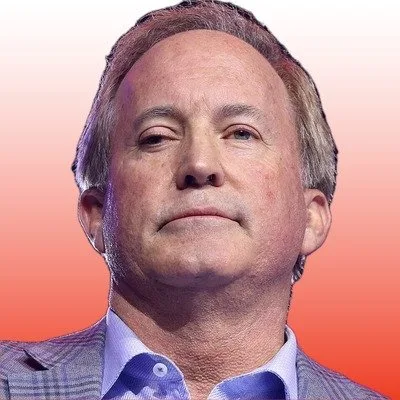
A US regulator has reopened a line of inquiry it had closed only last year, and is now examining whether Polymarket, the crypto-based prediction-market platform headquartered in New York, broke a 2022 enforcement deal by failing to keep American users off its overseas exchange. Two people familiar with the matter say the Commodity Futures Trading Commission, the federal agency that regulates derivatives and claims authority over prediction-market event contracts, is scrutinizing the controls Polymarket once used to work out where its customers were located, along with the way the company advertised to a US audience.
The review is part of a broader investigation the CFTC opened into the company earlier in 2026, and it revives questions the agency and the Justice Department had set aside in 2025 without bringing any charges. Both the CFTC and Polymarket declined to comment, and an open probe is not in itself evidence of wrongdoing.
What the regulator is examining now
The central question is compliance with the 2022 order: whether Polymarket actually did what it promised, which was to stop serving customers in the United States on its main platform. Investigators are looking at the firm's past geolocation controls, the systems meant to establish a trader's real location, and at marketing that may have reached Americans.
Separately, the CFTC is scrutinizing the US platform Polymarket began rolling out in late 2025, including its onboarding and customer-protection processes. Polymarket operates from New York but has run its public, token-based market through an entity registered in Panama, and the gap between those two arrangements is where the compliance questions concentrate.
The concern is not new inside the company. Shana Bautista, Polymarket's global head of investigations and intelligence, described US users reaching the offshore platform as "a really prevalent issue" in comments this past August, an acknowledgment from within the firm that the very behavior the 2022 deal was meant to end had kept happening.

The $1.4 million deal at the center of it
The settlement now back under review was entered on January 3, 2022. The CFTC fined Blockratize, Inc., the corporate entity doing business as Polymarket, $1.4 million to resolve allegations that the firm had been running an unregistered facility for swaps and binary-options-style contracts, and had operated unlawfully in the US since 2020.
The order did more than impose a penalty. It required Polymarket to wind down the non-compliant markets on its site and to cease and desist from offering them, and the firm agreed to stop making its market available to US users. That promise is the measure the CFTC is now holding the company against. If regulators conclude the controls fell short, the issue is no longer only the original conduct but a failure to live up to the terms that settled it.
Cleared in July, reopened by October
The timeline is what makes the reopening striking. On July 15, 2025, Polymarket CEO Shayne Coplan said in a post on X that the CFTC and the Justice Department had closed their investigations and cleared the company. About a week later, Polymarket bought a CFTC-registered derivatives exchange to serve as the backbone of a licensed US platform, the move that let it begin onboarding American customers legally.
Roughly fifteen months after that declared all-clear, the same agency is back inside the 2022 file. Neither the CFTC nor the Justice Department has explained why the matter was closed in 2025 or why the line of inquiry has been revived now, and that silence is the practical problem: a clearance a company builds its US expansion on means little if the regulator can quietly return to it.
The earlier phase of scrutiny was not a quiet paperwork exercise. During the Justice Department's related probe, the FBI searched Coplan's New York home in November 2024, an escalation that underscores how serious the criminal track had become before it was dropped.
The soldier, the VPN and 'exit mode'
The investigation also sits alongside the first criminal case the agencies have brought over trading on Polymarket's offshore platform. In April 2026 the CFTC and the Justice Department charged Gannon Ken Van Dyke, a US soldier, alleging he earned about $400,000 by trading on non-public information through the overseas market, reaching it with a VPN and using what prosecutors called an "exit mode" to mask his access. Van Dyke has pleaded not guilty, and his trial is set for December 7, 2026.
The case matters to the settlement review for a simple reason: it is a documented instance of a US person reaching the offshore platform and profiting there, exactly the outcome the 2022 order was meant to prevent. Whatever the verdict, the charge gives regulators a concrete example of the controls failing in practice.
A regulator on the offensive
The renewed Polymarket probe fits a broader posture at the CFTC. The agency's enforcement director said in March 2026, during his first month in the role, that he would aggressively police prediction markets, and the agency has been moving on several fronts at once.
On October 27, 2026, the same week the Polymarket review surfaced, the CFTC sued the State of Utah in the US District Court for the District of Utah, arguing that federal law gives it exclusive authority over prediction markets and preempts state rules. That filing is one front in litigation now spanning ten states over who gets to regulate event contracts. The agency's chairman, Michael S. Selig, is named in the Utah suit, signaling that the fight over jurisdiction is being run from the top.
Polymarket's standing in Washington is complicated by its investor roster. Donald Trump Jr., a partner at the investment firm 1789 Capital, has been reported as a backer of the company, which means a politically connected fund has a stake in how the regulatory questions resolve.
 CBOE24%YesNo
 ForecastEx20%YesNo
Why Israeli readers are watching
Polymarket is followed closely in Israel, where its prices have tracked contests that matter to local readers, from a Netanyahu-Eisenkot matchup to the shape of an Israeli election. For that audience the US probe is not a distant American story. The platform's ability to operate, and in some cases the ability of international readers to reach and read its markets, depends on how the compliance questions land.
For a trader holding positions on the US platform, the practical stake is continuity. Polymarket is onboarding American customers onto the exchange it bought in 2025, and a finding that its earlier controls breached the settlement could reach into how that newer, licensed business is allowed to run. A prediction market is a market and a position is a position, but the venue that prices those positions now carries an open regulatory question that did not appear resolved when the company said it had been cleared.
For now the only certainty is the reversal itself. The same agency that Coplan said had cleared his company in July was, by October, back inside the 2022 file, and it has not said what changed. Polymarket is booking US customers onto a newly bought, CFTC-licensed exchange on the strength of a clearance the regulator has quietly reopened. Until the agency explains the 2025 closure or brings a charge, every US position the company accepts rests on a settlement whose compliance is, once again, an unanswered question.