


The U.S. House Committee on Oversight and Government Reform, the chamber's main investigative panel, released a staff memorandum on November 13, 2026 recommending that Congress consider new restrictions on prediction-market trading by federal personnel, members of Congress and holders of security clearances. The options it lays out range from an outright ban to narrower limits on contracts tied to government decisions, and the report credits the platforms themselves, including Kalshi and Polymarket, for flagging most of the insider-trading incidents it documents.
It is the first product from a congressional committee to formally urge that kind of curb, and it lands at a charged moment: the Commodity Futures Trading Commission, the federal derivatives regulator, is fighting roughly a dozen states over who regulates event contracts, and Senator Elizabeth Warren, the Massachusetts Democrat, is preparing to chair the Senate Banking Committee with the sector in her sights.

What the committee wants Congress to weigh
The memo stops short of drafting a bill. Instead it hands lawmakers a menu. At one end is a complete prohibition on federal officials, lawmakers and clearance holders taking any position in prediction markets. At the other is a targeted rule that would bar trading only in contracts whose outcome a government official could influence or learn about early, the government-tied contracts where nonpublic information is most dangerous.
Chairman James Comer, the Kentucky Republican who leads the committee, framed the recommendation as a trust problem rather than a technology one. "Americans are rightly concerned about public corruption," he said. "Congress has a duty to ensure our laws adequately prevent insider trading, hold bad actors accountable, and prohibit government officials and employees from profiting from nonpublic information. We launched an investigation into insider trading on prediction market platforms and are encouraged by their efforts to prevent, detect, and report illegal activity. Congress must consider additional reforms to prevent public corruption and restore the American people's trust in government."
A six-month inquiry and nearly 1,700 pages
Comer opened the investigation on May 22, 2026 with letters to Kalshi, the CFTC-regulated event-contract exchange, and Polymarket, the crypto-based prediction-market platform. On September 29, 2026 he widened it to three more names: Hyperliquid Labs, the company behind the Hyperliquid on-chain trading venue; Crypto.com, the exchange that also lists event contracts; and PredictIt, the academic-linked political prediction market.
Across those five platforms the committee's staff collected nearly 1,700 pages of documents and internal communications and held five bipartisan staff briefings. The volume matters because it is the evidentiary base for the memo's central judgment, that the problem is real but mostly already visible, and often caught, on the platforms' own records.
The law may already reach it
One of the memo's quieter conclusions is that Congress may not need a new statute to prosecute the core conduct. It reads Section 4c(a)(3) and 4c(a)(4) of the Commodity Exchange Act, the federal law governing commodity and derivatives trading, as amended by the 2012 Stop Trading on Congressional Knowledge Act that explicitly barred public officials from trading on nonpublic information, to already cover officials who trade prediction-market contracts on inside knowledge.
That is the tension running through the document. The staff find that existing law likely prohibits the worst behavior, yet they still urge Congress to go further, because a general insider-trading ban is harder to enforce than a bright-line rule that simply keeps officials out of certain markets.
The platforms policed themselves
The most striking thread is how much credit the memo gives the companies it investigated. Four of the five cooperated substantially, and the staff found that most of the insider-trading incidents they examined were first detected and reported by the markets themselves, not by a government regulator.
Polymarket runs a surveillance system it calls PolyGraph, built with Chainalysis, the blockchain-analytics firm, to scan its public ledger for suspicious trading. Because every Polymarket trade is recorded on a public blockchain, a monitoring tool can trace patterns across wallets that a traditional exchange would never expose, which is part of why the committee found the markets catching what regulators did not.
Kalshi's monitoring flagged former Representative George Santos, whose trades drew scrutiny, and a White House teleprompter operator whose positions on presidential speeches became one of the inquiry's signature examples. In each case the platform surfaced the behavior before it surfaced anywhere else.

The cases that gave the risk a face
Two matters anchor the memo's argument that the danger is not hypothetical. In April 2026, federal prosecutors indicted a U.S. Army master sergeant who, the indictment alleges, made more than $409,000 trading on Polymarket using classified information. Those charges are unproven, and the case has not been tried.
Separately, in August 2026 the CFTC issued an order against the former White House teleprompter operator, penalizing positions taken on the timing and content of presidential speeches, information the operator had before the public did. Together the two cases map the spectrum the committee is worried about, from a clearance holder with battlefield secrets to a staffer with a few minutes' edge on a speech.
The platform that did not hand over records
Not everyone cooperated. Hyperliquid Labs told the committee it did not "possess the types of records and information" the staff had requested, including the know-your-customer identity data that lets an exchange tie an on-chain account to a real person. On a pseudonymous on-chain venue, the absence of those records is itself the finding: it is precisely the gap that makes misconduct hard to detect, and the structural weakness a future rule would have to confront.
A sector under widening scrutiny
The memo does not arrive in isolation. The CFTC is asserting jurisdiction over event contracts against roughly a dozen states that want to treat them under their own rules, and Warren, set to lead Senate Banking, has signaled she intends to press the industry. A House committee recommending federal-personnel limits, a federal regulator claiming primacy and an incoming Senate chair with the sector in view amount to pressure arriving from three directions at once, in a Congress whose own leadership is still being settled.
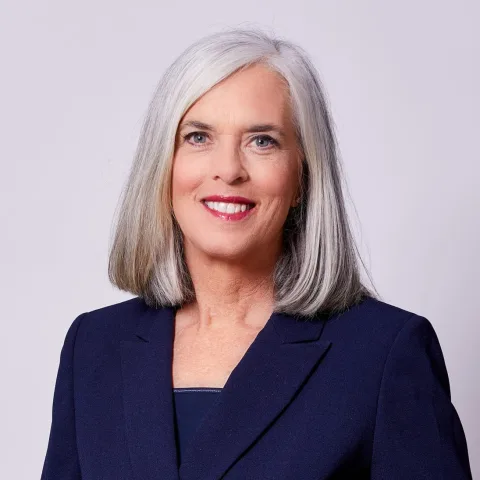 Katherine Clark98%是否
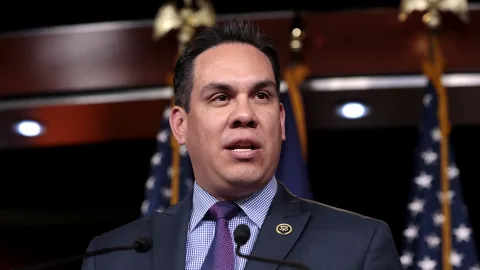 Pete Aguilar1%是否
For the platforms, the posture is unusual. They are being held up as part of the solution even as the people who use them, at least the ones with government credentials, are being eyed for new limits.
What it changes
For a trader with no government role, the memo changes nothing today; it is a recommendation, not a law. For a federal employee, a lawmaker or a clearance holder, it is a clear signal that a position in a prediction market may soon carry a rule that stocks and real estate already do. And for the companies, it formalizes a bargain they have been making quietly for a year: open the ledger, run the surveillance, report the bad actors, and earn the regulator's benefit of the doubt.
For all the talk of a ban, the memo's sharpest finding cuts the other way. The misconduct it catalogs was surfaced not by federal watchdogs but by the platforms' own tools, Polymarket's PolyGraph and Kalshi's internal flags. Comer's committee is proposing to constrain the users of systems whose transparency it just held up as the reason the cases exist at all, and whether Congress writes that contradiction into law is the question Warren's banking committee now inherits.


