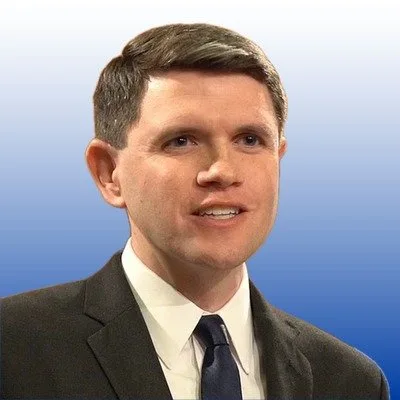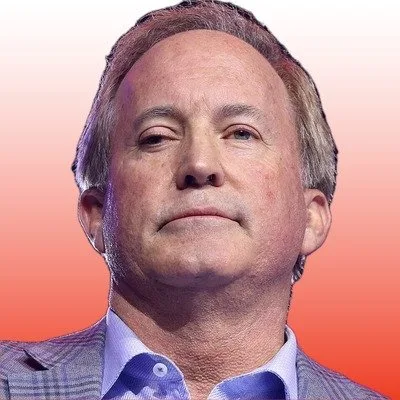

Polymarket has hired four senior executives in roughly five weeks, an unusually fast build-out of a management team for a company that until this summer ran largely on its founder and a lean crew. Founder and chief executive Shayne Coplan announced the most senior of them, Jacob Horne, on September 17, 2026, bringing in the co-founder and former chief executive of the NFT and creator platform Zora to lead product and rebuild Polymarket's on-chain trading. The push comes as the company's trading volume has dropped sharply since the World Cup and as it lines up a reported $1 billion funding round that would value it at $21 billion.
Taken together, the hires mark Polymarket's shift from an events-driven startup into something closer to a pre-IPO fintech, with a first chief financial officer, a growth chief, an operations lead and a product head recruited from Amazon, Uber, DoorDash and Zora. For the traders who use the platform, the change is less about any single price than about who now runs the venue their contracts resolve on.
Four hires in five weeks
The run began on August 12, 2026, when Polymarket named Travis VanderZanden, an early Uber executive and the founder of the Bird scooter company, as chief growth officer, with marketing folded into his remit. Weeks later, on September 10, the company named Warren Jenson its first chief financial officer. Jenson is a veteran finance chief whose career runs through Amazon, NBC, Delta, Electronic Arts and, most recently, the measurement firm Nielsen, and who sits on the boards of Dropbox and Ripple.
Collin McKinney Hill joined as vice president of operations from the food-delivery company DoorDash, where he was a general manager, after an earlier stint as chief of staff to Ray Dalio at the hedge fund Bridgewater Associates. And on September 17 came Horne, whose six-plus years building Zora make him the clearest signal of intent: Coplan hired him specifically to repair and expand the on-chain, DeFi side of Polymarket, the part that lets positions trade as tokens on a public blockchain rather than through a conventional brokerage.
The compression is the story. Four senior operators, each from a company at real scale, arrived inside about five weeks at a firm that had never carried a management bench this deep.
A fifth hire, and a signal on integrity
A fifth senior figure had arrived earlier and points in a different direction. Around June 2026, Polymarket brought in Shana Bautista, a former FBI and Coinbase investigator, as its global head of investigations and intelligence. By late August her unit had referred more than 100 cases to law enforcement, a figure that signals how seriously the company is treating manipulation and insider activity on a public ledger where every position is visible to anyone.
Hiring a career investigator before a compliance-minded CFO is its own kind of statement. It tells regulators and counterparties that Polymarket wants to be seen policing its own market, not just growing it.
Volume fell hard after the World Cup
The build-out lands against a steep slide. Combined volume across Polymarket and its U.S.-regulated arm fell from $12.89 billion in July to roughly $8.4 billion in August, a drop of about 35%, and the first monthly decline in a year. The pullback was even sharper in participation: monthly active traders nearly halved, from 667,400 to 336,300.
The timing is not a mystery. The 2026 World Cup had pulled enormous volume onto prediction platforms through the summer, and its end left a hole that autumn's slate of events has yet to fill. Rival Kalshi, a CFTC-regulated U.S. prediction exchange, still led the category with around $37 billion in August volume, a reminder of how much ground Polymarket is trying to defend as it rebuilds its U.S. presence.
Coplan has acknowledged that the platform's on-chain product performance declined as it scaled, which is precisely the problem Horne was hired to fix.
A reported $21 billion round
Set against the volume slump is a valuation moving the other way. Polymarket is in a reported $1 billion funding round led by 1789 Capital, the venture firm associated with Donald Trump Jr., which is putting in around $300 million. The round, described as in progress rather than closed, would value Polymarket at $21 billion, up 40% from a prior $15 billion mark.
The cap table underneath that number has already shifted toward Wall Street. Intercontinental Exchange, the owner of the NYSE, is Polymarket's largest shareholder with a stake of about 22%, a holding that gives a pillar of traditional market infrastructure a direct interest in how the prediction venue matures.
From founder-run startup to pre-IPO fintech
Put the pieces side by side and the strategy reads clearly. A first CFO with public-company experience, an operations chief from a logistics giant, a growth leader who has scaled consumer apps, a product head to rebuild the technical core, and a major exchange as anchor shareholder are the ingredients of a company preparing for a much larger stage, plausibly a public listing.
That is a different Polymarket from the one that made its name on a single U.S. election night. The question the hires implicitly answer is whether the infrastructure and management can carry the platform through quieter months, not just peak events.
The marketing probe in the background
The hiring spree also unfolds while Polymarket sits under a review of its marketing by the U.S. Commodity Futures Trading Commission, the federal regulator for derivatives markets, which is examining whether the company's promotions were deceptive. The probe follows an examination of more than 1,100 promotional videos, about 70% of which featured staged trades, some showing fabricated positions worth around $2 million, with creators paid $2,000 to $3,000 a month through a marketing program called Virality.
That backdrop reframes two of the hires. A first CFO and a career investigator are exactly the roles a company staffs when it expects to answer to regulators and wants its financial controls and integrity function visible before, not after, an enforcement conversation.
What the midterms will test
The near-term test is the U.S. midterm elections in November 2026, the kind of event that historically drives volume back onto prediction platforms. Bautista has framed her intelligence unit as ready for the manipulation attempts that tend to cluster around a vote, and the fresh volume, if it comes, will be the first real measure of whether the executive build-out arrived in time.
 Democratic Party95%YesNo
 Republican Party6%YesNo
 Democratic Party76%YesNoRepublican Party25%YesNo
The contracts on control of Congress are where that test shows up in real time, moving with every new poll and result as the crowd re-prices which party takes each chamber.
The four hires are Coplan's forecast of which story August told: a seasonal lull that the midterms and a rebuilt product will lift, or a ceiling the platform has already reached at roughly $8 billion a month. He has staffed for the first. The monthly volume, month after month, is the market's answer back, and this time the people reading it work for Polymarket.