


Coinbase, the largest US crypto exchange, told federal regulators on November 18, 2026 to move quickly and write prediction-market event contracts permanently into the legal definition of a 'swap', the category of derivative that falls under exclusive federal control. The filing, a formal comment letter to the Commodity Futures Trading Commission (the US agency that polices derivatives markets), landed on the final day of a 30-day public comment window and is the first position on record from a major platform in a rulemaking that will decide who regulates sports, political and crypto prediction markets in the United States.
The stakes are jurisdictional. If event contracts are swaps, they answer to one federal regulator and are shielded from the patchwork of state gaming laws and conflicting court rulings that have dogged Polymarket, Kalshi and Coinbase's own event business. In its own words, the company 'strongly supports the Proposal and encourages its swift adoption.'

What the rule would do
The rule at issue, catalogued by the CFTC as RIN 3038-AF82, is a proposed regulation that would add event contracts (markets that pay out on whether a defined future event happens, from an election result to a weather reading) to the formal list of instruments that count as swaps under Regulation 1.3. The agency published the proposal in the Federal Register on October 19, 2026 and set the comment deadline at November 18, exactly 30 days later. Coinbase filed with hours to spare.
It did not come alone. The CFTC paired the proposal with a companion measure, RIN 3038-AF81, an interim final rule that took effect the day it was published and carves casino-style gaming products out of the swap definition. Together the two actions draw a line: exchange-traded event contracts in, house-banked gaming out. Coinbase backed both.
The 'already swaps' argument
Coinbase's most consequential request is also its most technical. The company urged the CFTC to frame the rule as confirming what the law already says, not as creating a new category. Event contracts, it argued, already qualify as swaps under the Commodity Exchange Act, the federal statute that defines swaps and hands the CFTC its authority. The rule, in Coinbase's reading, should merely make that explicit.
The distinction matters more than it sounds. If a final rule implied that event contracts 'become swaps only when the rule takes effect', as Coinbase warned against, it would hand opponents an argument that the contracts were something else (a gaming product, say, subject to state law) right up until the regulation landed. By insisting the contracts were swaps all along, Coinbase tries to close off years of retroactive legal challenges before they start.
Keeping the door open for crypto
Coinbase also pressed the agency to keep the list of covered event categories open-ended. The proposal names sports, political, cultural and weather markets as examples; Coinbase asked the CFTC to retain 'including' language so those examples 'do not create a closed set or a presumption against other event contract categories.'
The target of that request is crypto. Event contracts tied to digital-asset prices and technology milestones are among the fastest-growing products in the category internationally, and a closed list would risk leaving them outside the federal perimeter. Coinbase, which runs its own CFTC-registered derivatives and event-contract businesses, has a direct commercial interest in seeing those markets covered.
Drawing the line against the casino
On the companion rule excluding casino products, Coinbase leaned into a framing it has pushed for years: that a prediction market is a neutral venue, not a counterparty to its users. Exchange-traded event contracts, it argued, are 'fundamentally distinct' from casino-style gaming operators, which act as the direct counterparty to every customer and profit when the customer loses. On an exchange, traders take positions against each other and the platform matches them. That structural difference, in Coinbase's telling, is exactly why event contracts belong with swaps and casino products do not.
The real fight is with the states
Underneath the definitional language is a jurisdictional land grab. Classifying event contracts as swaps places them under the exclusive authority of the CFTC, which in practice means state gaming regulators and state courts lose the power to go after them. CFTC Chairman Michael Selig, who leads the agency, has argued that federal swap jurisdiction over prediction markets is exclusive of the states, and Coinbase's letter is built to reinforce that position.
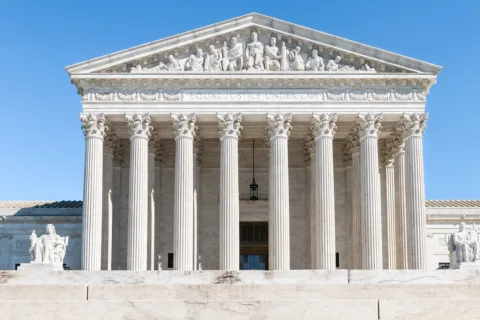
The question of whether sports event contracts are swaps at all is already headed toward the courts, and the market is already pricing how likely the Supreme Court is to take up the issue.
The people behind the letter
The letter was signed by Coinbase regulatory-policy officials. Press accounts named Julia Hueckel, the company's Director of Regulatory Policy, and David Shafer, a Director and Associate General Counsel, though the signatures have not been confirmed against the filed document. Coinbase pointed separately to the CFTC's October 2026 memorandum of understanding with the NBA on insider trading as evidence that the federal framework for policing these markets is already taking shape.
The filing landed in a rough week for the company's share. COIN shares slid to their lowest level since 2023 around the time of the letter, a reminder that Coinbase's regulatory ambitions and its market value are not moving in the same direction.

What happens next
With the comment window now closed, the CFTC holds the pen. The interim rule keeping casinos out is already law; the proposal pulling event contracts in could take months to finalize, and every word of it is contested. Coinbase's whole letter rests on one claim: that the fight was never really about whether prediction markets are regulated, but about which single word in the rulebook decides who does the regulating. If the agency adopts the 'already swaps' framing and the open-ended list, Coinbase gets a federal shield wide enough to cover the crypto contracts it most wants to sell. If it does not, the states are still in the room.


