


Democrats won control of both the House and the Senate in the November 3 U.S. midterms, and the prediction-market industry moved quickly to claim the result as a win of its own. ポリマーケット, the crypto-based prediction-market exchange, and カルシー, the event-contract exchange regulated by the U.S. Commodity Futures Trading Commission (CFTC), each promoted accuracy rates near 98% in the days after the vote, casting themselves as the night's sharpest forecasters.
A CoinDesk column published November 15 and a review by The New York Times tell a more measured story. The markets largely agreed with conventional polls, missed the same upsets the polls missed, and pulled clearly ahead only in the campaign's final stretch. This was the first U.S. midterm since both platforms won CFTC certification, which makes the scorekeeping about more than bragging rights.


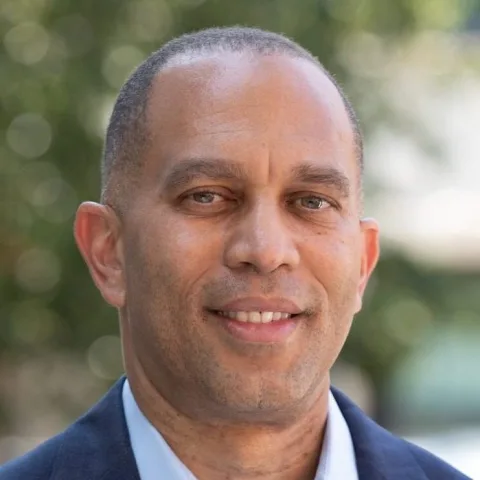 ハキーム・ジェフリーズ99%はいいいえ
 Jim Jordan3%はいいいえ
What the platforms are claiming
In the first days after the election, ポリマーケット pointed to an overall accuracy of roughly 98%, with figures near 98.6% for House races and about 97% for the Senate and governor contests. カルシー promoted numbers in the high 90s across the same three categories, including a House figure it put in the mid-to-high 90s.
Both sets of numbers are platform self-reports, measured against race calls as of the morning after the vote. Neither company has published an audited, line-by-line release that outside readers can check, which matters because the headline figures do not hold together.
The figures that do not reconcile
The accuracy percentages conflict from one outlet to the next, and they do not square with the race counts cited alongside them. カルシー's own tally of 356 of 360 winning House favorites works out to 98.9%, not the 96.6% House figure also in circulation. ポリマーケット's reported 419 of 427 markets settling correctly computes to about 98.1%, short of the 98.4% headline attached to it.
The discrepancies run deeper. One aggregate count credited to カルシー, 479 of 487 races resolved, cannot be rebuilt from its own components: 360 House, 33 Senate and 34 governor races sum to 427, not 487. Until either exchange releases the underlying list, the clean 98% belongs in quotation marks.
A confidence indicator, not a replacement for polls
Nikhilesh De, CoinDesk's regulatory reporter and the author of its "State of Crypto" newsletter, used his November 15 column to reframe what these markets actually measure. "I've been thinking about prediction markets less as an indicator of polling sentiment itself and more as an indicator of confidence in a given outcome," he wrote.
The distinction matters. A market price is a probability, the crowd's live estimate of how likely an outcome is, not a separate data source feeding new information into a race. When the contracts and the polls point the same way, the market is largely restating the polling consensus with money attached, and De's point is that it did exactly that for most of 2026.
The races the markets missed
If the markets were truly ahead of the polls, they would have caught the upsets the polls missed. They did not. In Iowa's Senate race, the contracts favored Representative Ashley Hinson, who lost the seat to Josh Turek. In Mississippi, ポリマーケット favored incumbent Senator Cindy Hyde-Smith until the results came in for Scott Colom.
The pattern repeated downballot. In Alabama's 2nd congressional district, Representative Shomari Figures beat Rhett Marques against the market's lean; in Wisconsin's 1st, Mitchell Berman unseated Representative Bryan Steil. South Carolina's Senate race, won by Annie Andrews, had no contracts at all, a reminder that a market only forecasts what someone chose to list.

 Democrats 14-16%93%はいいいえ
 Democrats 12-14%5%はいいいえ
What the Times review found
The New York Times compared the markets against mainstream election forecasts across the full campaign. Its finding, relayed as the markets-versus-polls debate reopened, was that the contracts were about as accurate as the forecasts for most of the race and moved decisively ahead only in the days just before November 3.
That is a narrower claim than calling the race outright. Leading in the final stretch, when the picture is clearest and late polling has already tightened, is a real edge but a modest one. It is closer to a sharp closing read than to the crystal ball the accuracy tallies imply.
The first midterm after CFTC certification
The stakes behind the numbers are regulatory as much as reputational. This was the first U.S. midterm run with both カルシー and ポリマーケット operating under CFTC certification, so their performance doubles as an early argument about whether event contracts deserve a permanent, legal place in American election coverage.
The money backs the ambition. Over the cycle, カルシー reportedly took around $2.5 billion in contracts, against roughly $600 million for ポリマーケット, a gap that makes カルシー the larger venue for U.S. political trading even as ポリマーケット carries the louder brand. With the sweep settled, attention is already turning to the next contests.

 ジョン・オソフ18%はいいいえ
 J・D・ヴァンス15%はいいいえ
Strip away the marketing and the 2026 result reads less like a triumph for prediction markets than a tie that broke late. The contracts moved with the polls, missed where the polls missed, and edged ahead only at the end, and the one number each platform most wants repeated, a clean 98%, is the one its own race counts refuse to confirm. The useful takeaway is not that the markets beat the pollsters; it is that a prediction market is best read as a real-time confidence meter on a race, reliable precisely when the rest of the evidence already agrees, and no sturdier than the list of contracts someone bothered to open.


