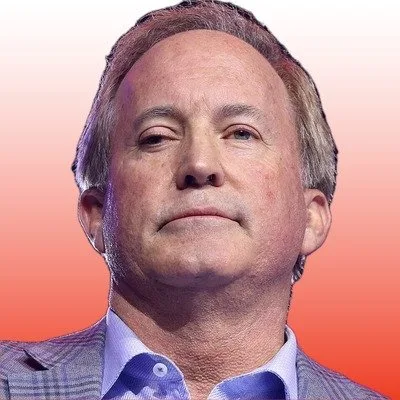
Shayne Coplan, the founder and chief executive of โพลีมาร์เก็ต, used a fireside chat at TOKEN2049 Singapore on October 7, 2026 to make an unusually blunt case against the chase for tokens that promise to rise 100 times over, calling it "a game of irrational exuberance and hot potato." Speaking on the opening day of the crypto industry's flagship conference at the Marina Bay Sands, in a conversation the agenda listed as moderated by investor and author Balaji Srinivasan, Coplan argued that prediction markets draw a different kind of trader: one who wants a position tied to a verifiable outcome rather than the hope of offloading a worthless asset before it collapses.
The remarks land as prediction venues post some of their largest volumes on record. Over the seven days to October 7, โพลีมาร์เก็ต traded about $1.21 billion, the second-largest total among prediction platforms, while แคลชี, the US-regulated event-contract exchange overseen by the Commodity Futures Trading Commission, led with roughly $2.3 billion, according to figures compiled by DefiLlama, a widely watched aggregator of on-chain and exchange data. The dual role is worth stating plainly: Coplan runs the largest blockchain-based prediction market, so his philosophy is also a sales argument, and he benefits directly if speculative money rotates out of memecoins and into the contracts his platform lists.
The hot-potato argument
Coplan's phrasing described the mechanics of a greater-fool trade, where the value of an asset lies not in what it is but in the next person willing to pay more for it. "People think they're buying something, it's worthless, but they're buying it," he said. "If it can go to 100X, they want to sell it before it goes back to zero."
The point was less a moral complaint than a structural one. In a market built on exponential upside, he argued, the entire strategy reduces to timing: get in, find a buyer, get out before the music stops. The asset itself is incidental.
Why "no exponential upside" is the selling point
Coplan's counter-pitch rests on a feature that sounds at first like a weakness. "On โพลีมาร์เก็ต, if you're trading these markets, there's no exponential upside," he said. A prediction contract resolves to either $1 or $0 depending on whether the stated event happens, so the most a position can be worth is $1. A contract bought at 40 cents can at best return 150%, never 100 times.
That ceiling is the entire argument. It replaces the open-ended lottery of a memecoin with a bounded question whose answer is knowable: an election result, a monetary-policy decision, a sports outcome. The return is capped, but so is the fiction, because the contract pays on what actually happened rather than on whether a greater fool arrives in time.
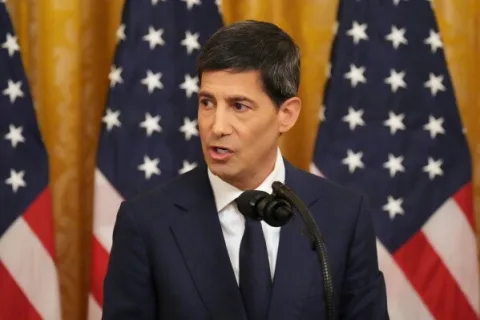
The December meeting of the US Federal Reserve is the kind of bounded question Coplan has in mind: the rate decision resolves on a date, to a published number, and the contract settles against it. There is no scenario in which it pays 100 times, and none in which its value depends on finding the next buyer.
Where the volume actually sits
The numbers behind the pitch are real but do not yet show the rotation Coplan describes. โพลีมาร์เก็ต's roughly $1.21 billion over seven days keeps it firmly in second place behind แคลชี's $2.3 billion. The two figures are separate venue totals rather than a single market, and both platforms have grown sharply on the back of a heavy election-and-macro calendar.
What the figures do establish is scale: prediction markets are no longer a niche, and the capital moving through them is large enough that a migration out of speculative tokens, if it came, would have somewhere credible to land.
An old phrase with a long memory
"Irrational exuberance" is not a casual borrowing. The phrase belongs to Alan Greenspan, then chair of the US Federal Reserve, who used it in December 1996 to question whether soaring share valuations had detached from reality. The economist Robert Shiller later made it the title of a book on speculative bubbles, published just as the dot-com mania crested. By reaching for it, Coplan placed the memecoin cycle in a lineage of manias that ended the same way.
He is not alone in calling the moment. Haseeb Qureshi, a partner at the crypto venture fund Dragonfly, has argued that the easy-money era in crypto is over, a reading that rhymes with Coplan's: the phase in which any token could go vertical is, on this view, behind the market rather than ahead of it.
Why the messenger matters
None of this makes โพลีมาร์เก็ต a neutral observer, and the honest version of the story says so. As the largest blockchain-based prediction market, the company stands to gain if the argument it is making comes true, which is reason to weigh the thesis on its merits rather than on the authority of the person delivering it.
There are harder caveats too. Access to โพลีมาร์เก็ต is restricted or blocked outright in many jurisdictions, so the "alternative" is not available to every trader hearing the pitch. And whether these contracts count as a regulated financial product remains unresolved across most legal frameworks, which is precisely the line regulators are still drawing.
The parts Coplan's story leaves out
A prediction market is only as honest as its information. In thin, low-liquidity markets, a trader who knows something the crowd does not can move a price before the public catches up, a form of information asymmetry that the research firm 10x Research has flagged as a structural weakness of the model. The cleaner the contract, the sharper the edge for whoever is better informed.
Then there is subject matter. Contracts on the course of armed conflict sit uneasily with the framing of prediction markets as sober civic instruments, and they draw the most pointed version of the ethical objection: that putting a tradable price on human events is not the same as forecasting them.

Even a seemingly simple price contract, such as whether Bitcoin closes above a given level on a specific day, shows how fine the line is between a forecast and a short-term trade. The outcome is verifiable, which satisfies Coplan's test, but the holding period can be measured in hours.
The alternative is growing its own fast game
That tension is already visible at the industry's other end. In September, แคลชี's 15-minute gold contracts drew more activity than Ether, with roughly 542 million gold trades against about 318 million for Ethereum, and roughly $5 million in fees against $2.6 million. These are event contracts by definition, yet a 15-minute window turns a "verifiable outcome" into something that behaves a great deal like the short-term speculation Coplan was warning against.
That is the real question his TOKEN2049 pitch opens. The contest was never simply memecoins versus prediction markets. It is whether event contracts stay tethered to outcomes that matter on a human timescale, or whether they compress into the same minute-by-minute churn, in which case the hot potato has not been retired at all. It has just been given a settlement date.