A Texas television station put small-business risk management on the local news on October 2, 2026, airing a segment on firms that use Kalshi, a federally regulated exchange, to hedge the weather swings and cost shocks that can swallow a season's profit. The broadcast from KBTX News 3, the Gray Television station serving Bryan and College Station, came two weeks after Kalshi signed a partnership with the United States Hispanic Chamber of Commerce to teach Hispanic-owned small businesses how the same contracts can offset everyday risk.
The timing is the story. A regional TV spot and a national chamber deal, landing inside a single month, are how a financial tool most owners have never heard of starts to feel ordinary. The instruments at the center of it are not tips and not wagers: they are event contracts, yes-or-no positions on a measurable outcome that pay a fixed dollar amount if the outcome lands and nothing if it does not. Kalshi is pitching them to shopkeepers as insurance they can buy without an insurance broker.
The ice cream shop that hedged its summer
The most concrete case Kalshi puts forward is a small ice cream shop in Los Angeles, 28 Wishes. Kalshi's own research documents that the shop's hedges paid out about $1,500 a month during the period studied, equivalent to 43% of its monthly rent. At that share, the payout implies rent of roughly $3,500, which gives a sense of how material the offset was for a single storefront.
The mechanism is simple once you see it. An ice cream shop lives and dies by heat: a cool, gray stretch means fewer customers and softer sales. A contract that pays out when temperatures fall turns that bad weather into cash, offsetting the revenue the shop loses on the same days. The hedge does not make the summer warmer; it makes a cold summer survivable.
One caution belongs next to the headline figure. Nearly every detailed small-business example in circulation comes from Kalshi's own materials, including the 28 Wishes case. The shop is both a genuine customer story and a marketing asset, and no independent tally yet shows how many owners run hedges like it.
Why a corner store can trade on a federal exchange
Kalshi, founded in 2018, is not an offshore site or a gambling app. The Commodity Futures Trading Commission, the U.S. regulator for derivatives, designated Kalshi a contract market on November 3, 2020, the same category of license that governs futures exchanges. On August 29, 2024, the CFTC registered the company's clearing affiliate, Kalshi Klear, as a derivatives clearing organization, the entity that stands between buyer and seller and guarantees that winning contracts actually pay.
That two-part status matters to a small-business owner more than it sounds. A designated exchange with a registered clearinghouse is held to federal rules on resolution, custody and reporting, which is the difference between a hedge that is a regulated financial position and one that carries no such protection. It is also why a chamber of commerce can put its name next to the product at all.
The Hispanic chamber deal
On September 15, 2026, Kalshi announced a partnership with the United States Hispanic Chamber of Commerce, the national body that represents more than 260 local chambers, alongside the Greater Washington Hispanic Chamber of Commerce. The deal is an education program: workshops and materials that walk Hispanic-owned small businesses through how event contracts can manage risk, not a trading promotion.
Ramiro Cavazos, the chamber's chief executive, framed it as a gap in access rather than appetite. A lot of Latino families are good at saving money, he said, but they may not be able to use and access all the financial tools that are available. Luana Lopes Lara, Kalshi's chief operating officer and a co-founder, said small businesses have so many things to think about that the company's job is to streamline the process so owners can understand where the contracts help.
How a weather hedge actually resolves
The weather contracts work off official readings. Kalshi lists markets on temperature and precipitation for specific cities and dates, and they resolve on the final numbers from the reference weather source. The company's own help pages warn traders to wait for those final readings rather than acting on preliminary ones, because an early figure can be revised after a market looks resolved.
The clearest way to understand the product is to watch one price move. A market on the day's high temperature in a given city reprices through the day as forecasts firm up, and by the close it reflects what actually happened:
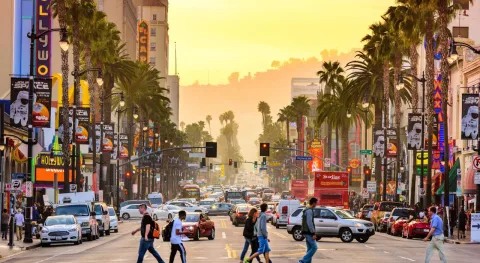
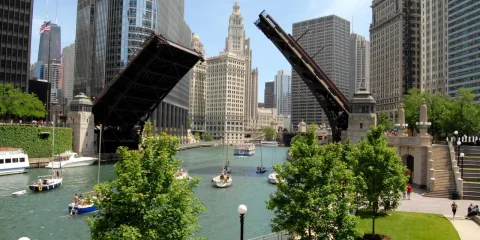
The same structure runs across cities, which is how a business in one place can hedge a risk measured wherever is relevant to it:
For an ice cream shop or an outdoor cafe, a position like this is bought ahead of a season, sized to the sales the business expects to lose on cold or wet days. It is not a view on whether the weather is good or bad; it is a payout engineered to land exactly when the till is light.
The Texas angle
Texas has been a live market for this idea beyond Friday's broadcast. In late August, a Houston Chronicle feature profiled weather trading tied to the city's extreme heat and the energy risk that comes with it, the kind of exposure a Gulf Coast business cannot insure away easily. The College Station segment is the local, retail version of the same story: not energy desks hedging megawatts, but a shop owner hedging a weekend.
Still mostly sports
The enthusiasm needs a hard number against it. Since July 2024, roughly 80% of Kalshi's trading volume has been sports, which means small-business hedging, for all the marketing weight behind it, is still a minority of what happens on the exchange. The partnership and the TV spot are an attempt to grow that use, not evidence that it has already arrived.
And the number that would resolve whether this is a movement or a marketing campaign does not exist yet: neither the US Hispanic Chamber nor Kalshi Klear has published an independent count of how many small businesses actually hold hedges. Until one does, 28 Wishes and its 43%-of-rent payout are doing double shifts as both case study and advertisement, and the shop owners around College Station who caught the KBTX segment are the real test of whether the pitch survives first contact with a payroll, on an exchange where 80% of the volume is still sports.