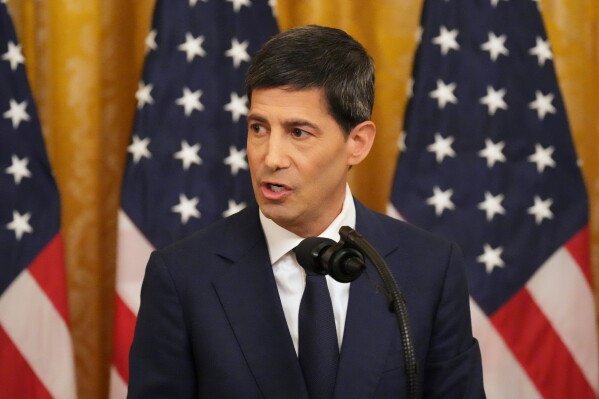
Donald Trump Jr.'s investment firm, 1789 Capital, told its backers that its main fund returned about 200% as of June 30, 2026 - far ahead of the roughly 21% average for venture funds started the same year. One of the biggest reasons is Polymarket.
1789 bought its stake in the prediction-market platform in August 2025, when Polymarket was valued at about $300 million, and Trump Jr. took a seat on the company's advisory board. Terms of the investment were never disclosed. What happened next re-priced that stake several times over.
From gray market to a $15 billion valuation
For years, Polymarket was barred from serving US customers. That changed when it bought a licensed derivatives exchange, QCEX, for $112 million, and on November 25, 2025 the Commodity Futures Trading Commission cleared it to operate as a fully regulated US platform. The legal reopening of the American market turned Polymarket from a regulatory outcast into a Wall Street target almost overnight.
The money followed fast. On October 7, 2025, Intercontinental Exchange - the owner of the New York Stock Exchange - said it would invest up to $2 billion in Polymarket at roughly a $9 billion valuation, and closed a first $600 million tranche on March 27, 2026. By this spring, Polymarket was reportedly valued at about $15 billion. Against the $300 million mark 1789 paid the previous summer, that is close to a 50x gain on paper in under a year.
The scrutiny that follows the returns
The timing has drawn attention in Washington, and Polymarket is only part of it. In the same stretch, another 1789-backed company, the rare-earth magnet maker Vulcan Elements, secured a $620 million loan from the Defense Department - the largest ever issued by the Pentagon's Office of Strategic Capital. House Natural Resources Committee Democrats, led by Representative Maxine Dexter, forced a vote to subpoena Trump Jr. over what they called a $670 million taxpayer-funded deal; Republicans on the committee blocked it. The Pentagon says the Trump connection played no role in the loan.
On Polymarket specifically, the record is narrower. 1789's investment came before the CFTC cleared the platform, not after, and no finding links the license to the advisory-board seat. Jessica Tillipman, who studies government procurement law at George Washington University, has said the rulebook for this kind of overlap is mostly unwritten. What is documented is the sequence and the size of the gain; what is not is a cause.
Who won the prediction-market boom
For most of 2026, the Polymarket headlines were about traders - the whale who cleared a million on the World Cup final, the insider who acted on a tip, the heavy users who traded daily and lost. The largest gain in the story was none of those trades. It was a stake in the platform itself, bought early and re-priced roughly 50 times over.
A price on Polymarket is a live estimate of a probability - useful to read, never a tip. Owning a piece of the company that runs the market is a different position entirely, and for 1789 Capital it has so far been the winning one.