
Rozdział 22 z 33
Wersja skrócona
Polymarket gości 157+ aktywnych rynków ekonomicznych obejmujących decyzje Fed o stopach (28 rynków), odczyty inflacji (19), politykę wojny handlowej i ceł (189 - obecnie największa podkategoria makro), szanse recesji, PKB i zatrudnienie. To najbardziej wydajne rynki na platformie, bo profesjonalne biura makro aktywnie uczestniczą obok detalu. Ta wydajność to cecha, nie błąd: oszacowanie konsensusu jest zawsze wycenione, co oznacza, że Twoja przewaga nigdy nie polega na „zgadnięciu liczby” - to przewidywanie odchylenia od konsensusu. Najlepszym narzędziem w 2026 jest Cleveland Fed Inflation Nowcast, publikowany codziennie o 10:00 ET, który przewiduje CPI z konsekwentnie lepszą dokładnością niż sondaże Blue Chip czy SPF. Ten przewodnik obejmuje każdy ważny rynek ekonomiczny, dokładny kalendarz publikacji, cztery źródła danych nowcastingu, które dają przewagę, cztery strategie działające w 2026 i konkretne wzorce reakcji łańcuchowej między rynkami ekonomicznymi a resztą Polymarket.
- Każdy ważny typ rynku ekonomicznego z bieżącą wyceną z kwietnia 2026
- Źródła danych, których używają profesjonaliści: nowcast Cleveland Fed, Atlanta Fed GDPNow, CME FedWatch, kalendarz BLS
- Cztery strategie: pozycjonowanie przed publikacją, trend po publikacji, korelacja międzyrynkowa i zbliżanie się do terminu
- Dokładny kalendarz publikacji na 2026 - NFP, CPI, FOMC, PKB, PCE
- Dlaczego rynki ceł są kategorią makro o najwyższym wolumenie teraz
- Kiedy NIE handlować - dwa okna, które niezawodnie tracą pieniądze

Rynek Polymarket o decyzji Fed w sprawie stóp ("Fed Decision in July?"): wynik FOMC wyceniany jest w wzajemnie wykluczających się koszykach - bez zmian, cięcie 25 pb, podwyżka 25 pb, 50+ pb - każdy własny wiersz Tak/Nie. Dominujący koszyk to implikowane oczekiwanie rynku co do posiedzenia.
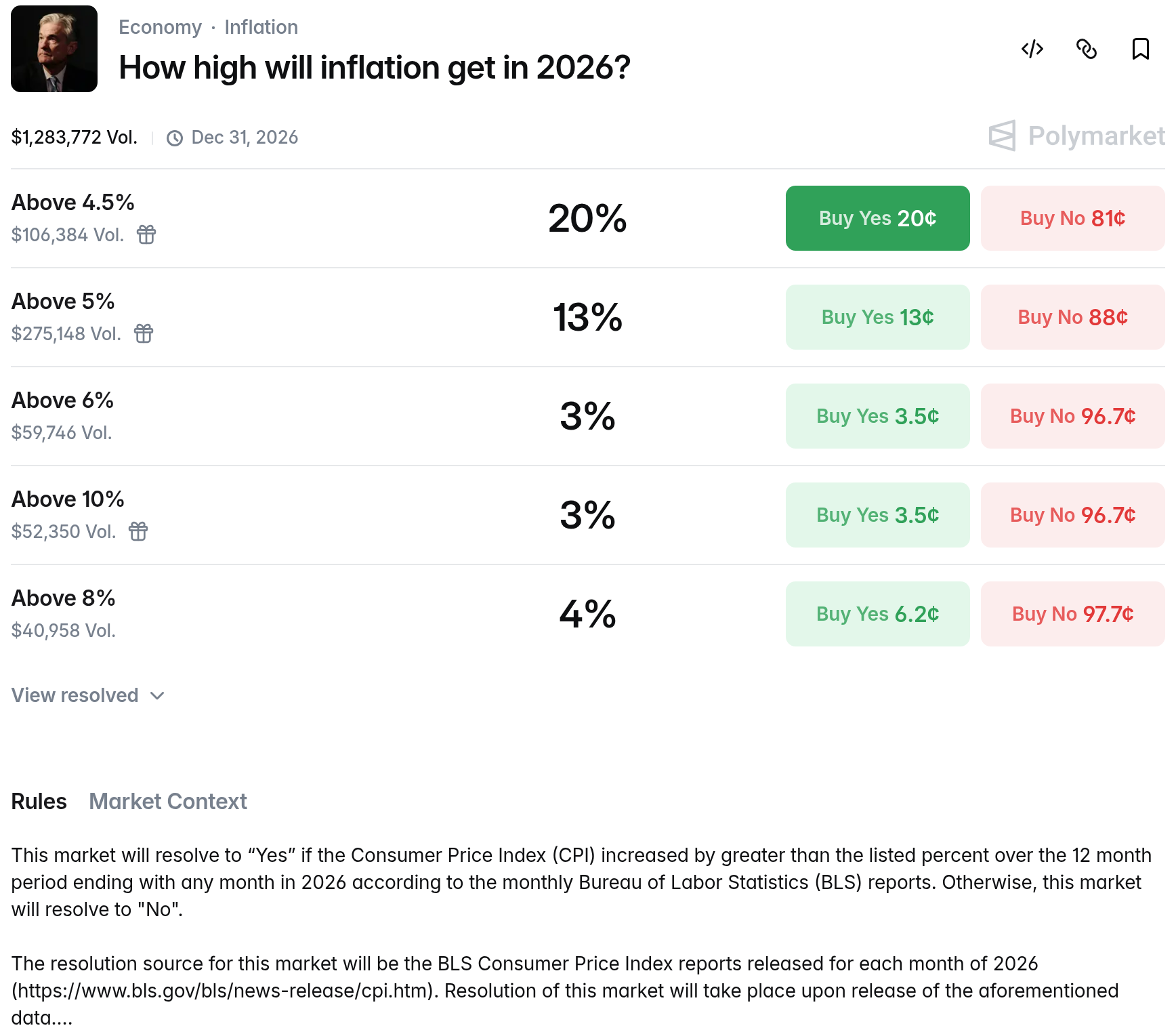
Rynek progu inflacji na Polymarket ("How high will inflation get in 2026?"): każdy poziom CPI - powyżej 4,5%, 5%, 6%, 8%, 10% - to własny wiersz Tak/Nie, więc drabina cen odzwierciedla pełny rozkład rynku dla inflacji 2026. Rozstrzygnięcie następuje na podstawie oficjalnego wskaźnika cen konsumpcyjnych (CPI) BLS.
Część 1 - Krajobraz rynku ekonomicznego (kwiecień 2026)
Decyzje Fed o stopach
Rynki decyzji na posiedzenie dla każdego posiedzenia FOMC 2026 (29 kwietnia, 17 czerwca, 29 lipca, 16 września, 28 października, 9 grudnia) plus rynki zagregowane jak „Ile cięć w 2026?” i „Stopa na koniec 2026?”
| Rynek | Bieżąca wycena | Prawdopodobieństwo implikowane |
|---|---|---|
| FOMC 29 kwietnia: brak zmiany (3,50-3,75%) | 99,4¢ | 99,4% |
| FOMC 17 czerwca: brak zmiany | 92,5¢ | 92,5% |
| Łączne cięcia stóp 2026: zero | 34,3¢ | 34,3% |
| Łączne cięcia stóp 2026: jedno | 29,5¢ | 29,5% |
| Łączne cięcia stóp 2026: dwa | 18,1¢ | 18,1% |
| Stopa na koniec 2026: 3,25-3,50% | 31,8¢ | 31,8% |
Mediana wykresu kropkowego Fed z marcowego SEP 2026 to pojedyncze cięcie 25 pb do końca roku do 3,4%. Polymarket jest nieco bardziej gołębi niż wykres kropkowy (implikując więcej cięć) - typowe przechylenie tłumu detalicznego.
Rynki inflacji
CPI, PCE i rynki progowe dominują handel inflacją. CPI z marca 2026 wyszedł na 3,3% rdr (w górę z 2,4% w lutym), napędzany głównie skokiem energii z kwietniowego konfliktu z Iranem 2026. To zaskoczyło rynek na płask - nowcast Cleveland Fed wołał 2,6% aż do wybuchu konfliktu z Iranem.
- Miesięczne odczyty CPI (rynki progowe co 0,1%)
- Annualizowany CPI na koniec 2026
- PCE bazowy vs nagłówkowy
- CPI średnia obcięta i mediana z regionalnych Fedów
Rynki recesji
„Recesja USA do końca 2026” obecnie przy 25,5% prawdopodobieństwa (74,5% brak recesji). Rozstrzygnięcie to dwa kolejne kwartały ujemnego realnego wzrostu PKB LUB oficjalne ogłoszenie NBER.
- Recesja na koniec roku: 25,5¢
- Recesja rozpoczynająca się w II kw. 2026: 11,8¢
- Recesja rozpoczynająca się w III kw. 2026: 14,2¢
- Recesja rozpoczynająca się w IV kw. 2026: 18,9¢
Rynki wojny handlowej / ceł
Część 2 - Źródła rozstrzygnięcia i kalendarz publikacji
| Typ rynku | Oficjalne źródło | Dzień / godzina publikacji | Okno wyceny |
|---|---|---|---|
| Decyzja Fed | Oświadczenie FOMC Rezerwy Federalnej | Śr 14:00 ET (8 posiedzeń/rok) | 2-4 tygodnie wcześniej |
| Konferencja szefa Fed | Konferencja prasowa FOMC | 14:30 ET tego samego dnia co decyzja | Wyceniane podczas konferencji |
| CPI | BLS | 8:30 ET, ~12-14 dni po miesiącu referencyjnym | 3-5 dni wcześniej |
| PCE | BEA | Ostatni piątek miesiąca | 2-3 dni wcześniej |
| PKB (wstępny/przedwstępny/końcowy) | BEA | ~30/60/90 dni po kwartale | 5-7 dni wcześniej |
| Non-Farm Payrolls | BLS Employment Situation | Pierwszy piątek 8:30 ET | 2-3 dni wcześniej |
| JOLTS | BLS | ~6 tygodni po miesiącu referencyjnym | 1-2 dni wcześniej |
| Recesja | Dwa kwartały ujemnego PKB lub NBER | Zmienne (NBER spóźnia się o 6-18 miesięcy) | Ciągłe |
Część 3 - Źródła danych dające przewagę
Cleveland Fed Inflation Nowcast (TO narzędzie)
Inne źródła pierwotne
- Atlanta Fed GDPNow - model PKB w czasie rzeczywistym aktualizowany kilka razy w tygodniu. Przewyższa profesjonalnych prognostów na horyzoncie 2-4 tygodni.
- CME FedWatch - prawdopodobieństwa implikowane z futures na fed funds. Porównaj z Polymarket bezpośrednio - jeśli rozchodzą się o 5+ punktów, jest czysty arbitraż.
- Kalendarz publikacji BLS (bls.gov/schedule/) - pełny harmonogram 2026 dla CPI, zatrudnienia, PPI, PPI usług.
- Harmonogram publikacji BEA - PKB, PCE, dochód osobisty.
- Rezerwa Federalna - kalendarz FOMC, wykresy kropkowe (SEP), protokoły po posiedzeniu.
- Wnioski (bezrobocie) - publikowane co czwartek o 8:30 ET, przydatny wskaźnik wyprzedzający dla NFP.
Źródła wtórne
- Terminal Bloomberg (jeśli masz dostęp) - oszacowania konsensusu, liczby szeptane
- ForexLive - darmowa relacja w czasie rzeczywistym z każdej publikacji ekonomicznej
- Blog Calculated Risk - kontekst dla każdej ważnej publikacji
- Twitter/X - ekonomiści jak @NickTimiraos (obserwacja Fed), @ernietedeschi, @gjtedrow
Część 4 - Cztery strategie, które wciąż działają w 2026
Strategia 1: Pozycjonowanie przed publikacją na podstawie rozbieżności nowcastu
- Każdego ranka o 10:00 ET sprawdzaj nowcast Cleveland Fed
- Porównaj z najnowszym konsensusem Bloomberg/Reuters
- Jeśli nowcast rozchodzi się o 0,2% lub więcej, przeskanuj rynki progowe inflacji na Polymarket
- Szukaj rynków wycenionych wobec konsensusu, a nie nowcastu
- Wejdź 2-4 dni przed publikacją, wychodź etapami po publikacji
Strategia 2: Handel trendem po publikacji
Pierwsze 5 minut po ważnej publikacji jest chaotyczne i drogie do handlu. Ale 30-minutowe okno po początkowym skoku często pokazuje czysty trend, gdy rynek trawi pełny szczegół publikacji (bazowy vs nagłówkowy, kierunek niespodzianki, rewizje).
- Poczekaj 5-10 minut na początkowy skok i odwrócenie
- Oceń: czy konsensus pasował, został pobity czy przegapiony? Kierunek niespodzianki?
- Wejdź w kierunku niespodzianki z ciasnymi stopami
- Wyjdź w ciągu 60-90 minut, gdy ruch się dopełnia
Strategia 3: Handel korelacją międzyrynkową
Dane ekonomiczne wyzwalają reakcje łańcuchowe przez kategorie Polymarket. Traderzy, którzy rozumieją te korelacje, mogą zajmować pozycje wielorynkowe, które dominują naiwne transakcje jednorynkowe.
| Katalizator | Efekt podstawowy | Efekty wtórne przez Polymarket |
|---|---|---|
| Gorące CPI (0,3%+ powyżej konsensusu) | Szanse cięcia stóp Fed spadają 8-15 punktów | Szanse recesji w górę, rynki złota w górę, aprobata Trumpa w dół |
| Słabe NFP (100 tys.+ poniżej konsensusu) | Szanse recesji w górę 4-8 punktów | Szanse cięcia stóp w górę, rynki aktywów ryzykownych wyprzedają się, aprobata polityczna spada |
| Ogłoszenie ceł | Oczekiwania inflacyjne rosną 2-6 punktów | Rynki CPI przeceniają się wyżej, recesja w górę, prawdopodobieństwa umów krajowych się przesuwają |
| Szok geopolityczny (konflikt z Iranem kwiecień 2026) | CPI napędzane energią w górę; CPI skoczył 2,4%→3,3% | Rynki zawieszenia broni na Bliskim Wschodzie przeceniają się, cięcia Fed opóźnione, recesja w górę |
| Gołębia konferencja Fed | Szanse cięcia stóp w górę 5-10 punktów | Recesja w dół, risk-on, aprobata Trumpa lekko w górę |
Strategia 4: Zbliżanie się do terminu (rynki ceł)
Wiele rynków ceł ma twarde terminy: „Czy Trump usunie cła przed wygaśnięciem 90-dniowej pauzy?” W miarę zbliżania się terminu bez działania udziały Nie niezawodnie zyskują na wartości. To strukturalna, powtarzalna przewaga na ograniczonych czasowo rynkach politycznych. Wzorzec 2026 to 60-70% rynków ceł „działanie przed terminem” rozstrzygających się na Nie.
- Zidentyfikuj ograniczone czasowo rynki polityczne z 10+ dniami do terminu
- Filtruj pod kątem cen Tak powyżej 25¢ (strona Nie jest niedowartościowana)
- Kup Nie, trzymaj do zbliżenia się terminu
- Wychodź etapami, gdy prawdopodobieństwo spada poniżej 15¢ - nie jedź do zera, zawsze jest ryzyko ogona
Część 5 - Wyczucie czasu Twoich transakcji
Wydarzenia o wysokim wpływie (czerwone wydarzenia na większości kalendarzy)
Tworzą największe ruchy rynku - 10-15% wahania są możliwe na istotnych rynkach:
- Non-Farm Payrolls - pierwszy piątek każdego miesiąca, 8:30 ET
- CPI - miesięcznie, 8:30 ET, ~12-14 dni po miesiącu referencyjnym
- Decyzja FOMC + konferencja - 14:00/14:30 ET, 8 posiedzeń rocznie
- PKB wstępny - kwartalnie, ~30 dni po zakończeniu kwartału
- PCE - ostatni piątek miesiąca, 8:30 ET
Kiedy NIE handlować
- 2-3 dni przed ważną publikacją - płynność cienieje, gdy traderzy redukują ryzyko, spready dramatycznie się poszerzają, a płacisz więcej w poślizgu, niż zyskujesz na pozycji
- Pierwsze 5 minut po publikacji - chaotyczna dwukierunkowa akcja cenowa, arkusze zleceń rozrywane, poślizg może być 5-10× normalny
Część 6 - Ryzyka specyficzne dla ekonomii
| Ryzyko | Dotkliwość | Łagodzenie |
|---|---|---|
| Konsensus już wyceniony | Wysoka | Handluj tylko, gdy masz zróżnicowany pogląd - rozbieżność nowcastu, nie tylko posiadanie opinii |
| Rewizje danych | Średnia | Sprawdź zasady rynku - rozstrzygnięcie zwykle używa początkowej publikacji, ale potwierdź |
| Skorelowane pozycje | Średnia | Trzy rynki CPI to zasadniczo jeden zakład - dobierz wielkość odpowiednio |
| Ingerencja polityczna (cła) | Wysoka | Dobieraj rynki ceł konserwatywnie; zakładaj, że irracjonalne wyniki są możliwe |
| Błąd komunikacji Fed | Niska | Fed rzadko zaskakuje samą decyzją; niespodzianki przychodzą w konferencjach prasowych i SEP |
| Tryb awarii nowcastu | Niska - Średnia | Nowcast załamuje się podczas szoków podażowych (np. konflikt z Iranem kwiecień 2026) |
| Wydarzenie makro typu czarny łabędź | Średnia | Trzymaj suchy proch - okazja często pojawia się 24-48h po szoku |
Część 7 - Profesjonalny tryb pracy handlu ekonomicznego
- Zbuduj kalendarz publikacji - zaznacz każdą datę CPI, NFP, FOMC, PCE, PKB na rok
- Sprawdzaj nowcast Cleveland Fed codziennie o 10:00 ET - jest darmowy, lepszy niż konsensus Bloomberga, używaj go
- Porównaj z CME FedWatch przed wejściem na rynki Fed - arbitraż międzyplatformowy to często 5-10 punktów
- Filtruj pod kątem rozbieżności - konsensus vs nowcast, Polymarket vs futures Fed, oczekiwania vs rzeczywistość
- Wejdź 3-7 dni przed publikacjami - płynność jest najlepsza, wycena nie w pełni się zbiegła
- Używaj zleceń z limitem - opłaty na rynkach ekonomicznych to 1,25% szczytowy taker, 0% maker
- Dobieraj wg ćwierć-Kelly - zobacz dobór wielkości pozycji
- Unikaj handlu 2-3 dni przed ważnymi publikacjami - płynność zbyt cienka
- Nie handluj pierwszych 5 minut po publikacji - poczekaj, aż skok przeminie
- Śledź reakcje łańcuchowe - niespodzianki CPI wpływają na recesję, Fed, aprobatę polityczną i rynki handlu jednocześnie
Część 8 - Zweryfikowane wskazówki profesjonalistów dla rynków ekonomicznych
- 10:00 ET każdego dnia handlowego - otwórz stronę Cleveland Fed Inflation Nowcast. Trzydzieści sekund. To pojedynczy nawyk o najwyższym ROI na makro Polymarket.
- Zapisz konsensus, zanim spojrzysz na rynek - unikaj zakotwiczenia na bieżącej cenie. Twój pogląd vs konsensus to transakcja; cena rynkowa to wykonanie.
- Handluj tylko rozbieżnością, nie kierunkiem - jeśli nowcast i konsensus się zgadzają, transakcja jest już wyceniona. Pomiń ją i poczekaj na następną publikację.
- Krzyżowo sprawdzaj CME FedWatch na każdym rynku Fed - jeśli Polymarket i futures na fed funds nie zgadzają się o 5+ punktów, masz arbitraż dwóch miejsc obrotu na wielkość, którą zniesiesz.
- Dobieraj rynki ceł na połowę swojej normalnej wielkości - irracjonalność polityczna to największy czynnik strat makro roku. Zakładaj, że najgorszy wynik jest możliwy, nie modalny.
- Nigdy nie handluj pierwszych 5 minut po publikacji - spready 5-10× normalne, płynność zniknęła, dwukierunkowe szarpnięcie. Poczekaj na okno sprzątania.
- Wejdź 3-7 dni przed publikacjami, wyjdź w publikację - zbieżność przed publikacją to najczystsza część krzywej. Nie próbuj handlować samej publikacji.
- Używaj makerów z limitem na wszystkim - 0% opłaty maker + rabat za płynność vs 1,25% taker. Przez 200 transakcji rocznie ta luka to 1-2% bankrollu, co jest przewagą większości ludzi.
- Śledź reakcje łańcuchowe wyraźnie - niespodzianka CPI nie tylko rusza rynki inflacji; rusza Fed, recesję, aprobatę, złoto i rynki umów krajowych. Ustaw alerty przed publikacją na wszystkich pięciu.
- Trzymaj suchy proch na szoki - konflikt z Iranem z kwietnia 2026 wyprodukował największą jednodniową przecenę makro w historii Polymarket. Traderzy z 20% rezerwy gotówkowej uchwycili 3-5× R. Traderzy w pełni zaangażowani zjedli zmienność.
- Szanuj rewizje - BLS zrewidował NFP z lutego 2026 w dół o 68 tys. miesiąc po publikacji. Rynki, które już się rozstrzygnęły, nie były dotknięte; rynki, które jeszcze nie, czasem przeceniały się gwałtownie. Sprawdzaj zasady rozstrzygnięcia na każdej transakcji.
- Maks. ćwierć-Kelly - nawet z prawdziwą przewagą publikacje makro są binarne i grubogonowe. Ćwierć-Kelly z odczytem pewności 55% trzyma Cię w grze przez nieuniknione 3-4 przegrane z rzędu.
| Sytuacja | Profesjonalny ruch |
|---|---|
| Nowcast rozchodzi się o 0,2%+ od konsensusu | Buduj pozycję 3-7 dni wcześniej, limit maker, dobierz pełny ćwierć-Kelly |
| CME FedWatch 5+ pkt powyżej Polymarket | Kup tańszą stronę na Polymarket, dobierz do arbitrażu, trzymaj do rozstrzygnięcia |
| Pierwsze 5 min po ważnej publikacji | Ręce precz. Obserwuj szarpnięcie, nie dobieraj nic. Wejdź ponownie w oknie sprzątania. |
| Termin ceł w ciągu 10 dni, Tak > 25¢ | Sprzedaj Tak / kup Nie; wychodź etapami, gdy prawdopodobieństwo spada poniżej 15¢ |
| Szok podażowy (ropa, wojna, pogoda) | Nowcast się załamuje; poszerz swoje pasmo pewności; poczekaj na następną publikację |
| Konferencja Fed zaprzecza tonowi oświadczenia | Zagraj przeciw początkowej reakcji po 5 min; następny trend 60-90 min jest zwykle poprawny |
| NFP 100 tys.+ poniżej konsensusu | Rynki recesji w górę 4-8 pkt, szanse cięcia stóp w górę 5-10 pkt; wstępnie ustaw wszystkie pięć rynków reakcji łańcuchowej przed publikacją |
Najważniejszy wniosek
Rynki ekonomiczne (Fed, CPI, GDP) nagradzają traderów, którzy czytają oficjalny harmonogram publikacji oraz źródło rozstrzygnięcia - wartość, która rozlicza rynek, to ta wskazana w opisie, a nie ta z nagłówka.
Co dalej?
Rynki ekonomiczne są najbardziej wydajne na Polymarket, co oznacza, że są też najbardziej uczciwe - Twoja przewaga musi być prawdziwa. Dobra wiadomość jest taka, że przewaga jest dostępna: sam nowcast Cleveland Fed produkuje 3-5 transakcji z wysokim przekonaniem miesięcznie, jeśli jesteś cierpliwy. Połącz to z czystymi transakcjami korelacji międzyrynkowej, a masz prawdziwą substrategię makro, która nie wymaga dostępu do specjalistycznego terminala.
Dalej: handel geopolityką, strategie zaawansowane i rynki wielowynikowe (NegRisk).
Polecane lektury
Zacznij tutaj, jeśli jesteś nowy, lub przeskocz prosto do strony pasującej do Twojego etapu: