
Rozdział 20 z 33
Wersja skrócona
Polymarket prowadzi 260+ aktywnych rynków krypto obejmujących 5-minutowe kontrakty binarne (do 60 mln USD dziennego obrotu), miesięczne drabiny celów cenowych, zakłady pre-market FDV na nadchodzące starty tokenów i - od 21 kwietnia 2026 - kontrakty perpetual z dźwignią do 10×. Krypto to jedna z najwyższego wolumenu kategorii na platformie, ale niesie też najwyższe opłaty taker (do 1,80% szczytowo), najbardziej agresywną konkurencję botów i najgorszą ogólną rentowność dla detalu: tylko około 16,8% portfeli specyficznych dla krypto wykazuje zyski netto, wobec średniej 7,6% dla traderów dyskrecjonalnych w całej platformie. Ten przewodnik obejmuje każdy typ rynku, matematykę opłat, która naprawdę ma znaczenie, jak Chainlink Data Streams auto-rozstrzygają kontrakty i pięć strategii, które wciąż działają dla ludzi w 2026.
- Pięć typów rynków krypto (5-min, 15-min, miesięczne, pre-market, perpy) i kiedy każdy ma sens
- Dlaczego szczytowe opłaty taker to 1,80% i jak legalnie płacić 0% zleceniami maker
- Jak Chainlink Data Streams czynią krypto kategorią o najniższym sporze na Polymarket
- Pięć strategii: wykonanie w ostatniej sekundzie, niedopasowanie wyroczni, wycena zmienności implikowanej, arbitraż międzyplatformowy i czysty market making
- Dokładna lista monet z aktywnymi rynkami i typowa płynność na poziom
- Dlaczego kontrakty perpetual to nie ten sam produkt, który znasz z Binance

Kategoria krypto: 260+ aktywnych rynków, 40-60 mln USD dziennego obrotu na 5-minutowych kontraktach BTC, najniższe ryzyko sporu na platformie.
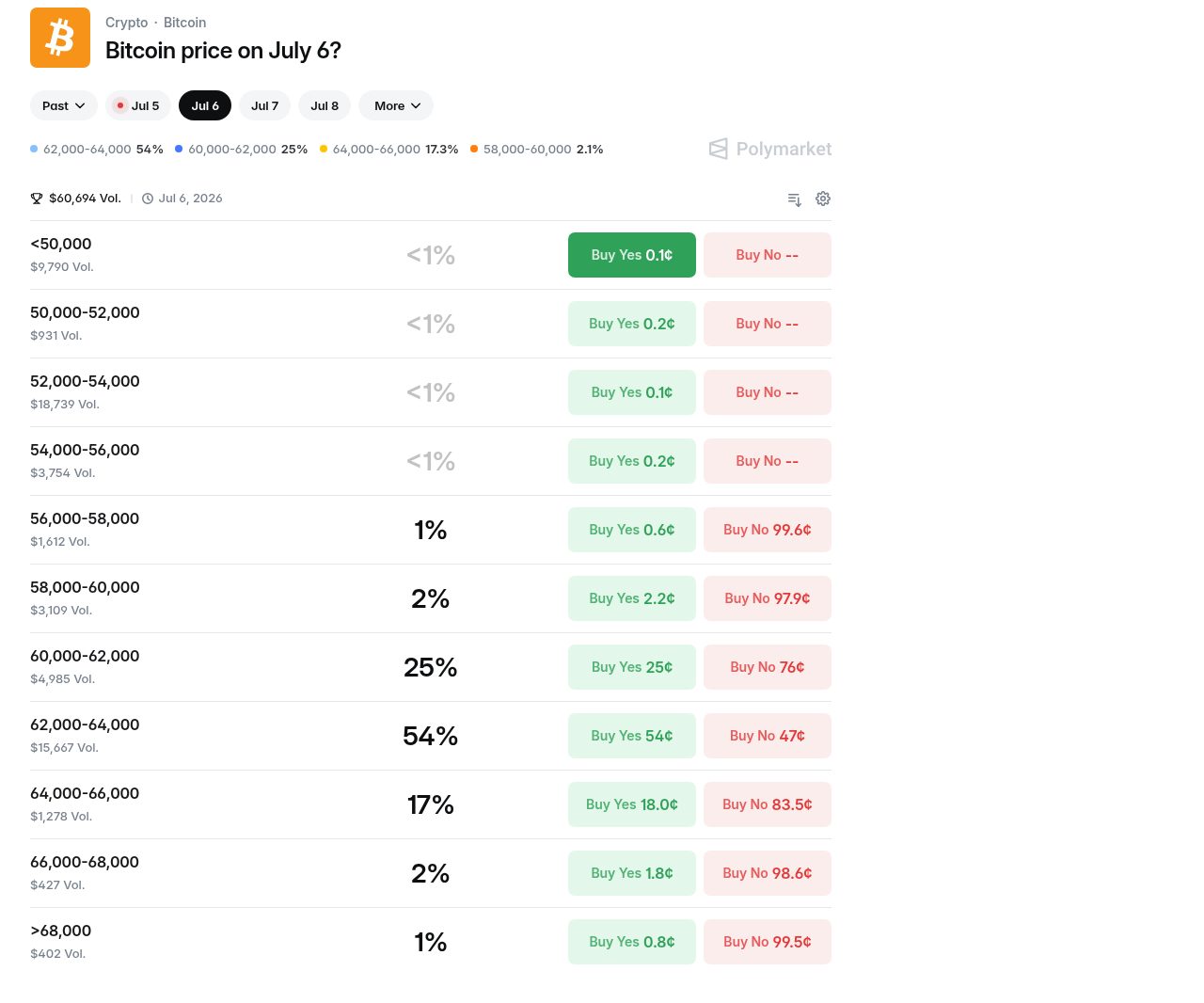
Pojedynczy rynek krypto z bliska: „Bitcoin price on July 6?”. Każdy przedział cenowy to osobny wynik z ceną Buy Yes / Buy No na żywo. Procenty to szanse rynku - sumują się do około 100%, bo wygrać może tylko jeden przedział.
Część 1 - Krajobraz rynku krypto
Sekcja krypto Polymarket to najruchliwsza nie-polityczna kategoria według liczby kontraktów i najruchliwsza według prędkości. Typowy dzień handlowy w kwietniu 2026 wygląda tak:
| Kategoria | Aktywne rynki | Dzienny obrót (w przybliżeniu) | Typowy czas trwania |
|---|---|---|---|
| 5-minutowe BTC w górę/w dół | Rolujące (nowe co 5 min) | 40 mln - 60 mln USD | 5 minut |
| 15-minutowe BTC w górę/w dół | Rolujące (nowe co 15 min) | 10 mln - 18 mln USD | 15 minut |
| Miesięczne cele cenowe | 80 - 120 | 3 mln - 8 mln USD | 1 - 30 dni |
| Pre-market FDV | 112 | 500 tys. - 2 mln USD | 1 - 90 dni |
| Kontrakty perpetual | Lista oczekujących (wczesny dostęp) | Jeszcze nieraportowane | Ciągłe |
1. Kontrakt 5-minutowy
Co 300 sekund co do sekundy Polymarket otwiera świeży rynek binarny: „Czy BTC będzie wyżej czy niżej niż jego cena otwarcia, gdy okno się zamknie?” Udziały Tak/Nie wyceniają się między 0-100 centów i rozliczają natychmiast, gdy okno się kończy.
- Rozliczenie: Chainlink Data Streams (subsekundowy kanał wyroczni) - ta sama wyrocznia używana przez Aave, Compound i GMX
- Poziom opłat: Poziom 1 / Wysoka prędkość - szczytowa opłata taker 1,80%
- Opłata maker: 0% (zlecenia z limitem siedzące w arkuszu zarabiają zamiast tego rabaty)
- Dominujący gracze: 6-10 instytucjonalnych market makerów prowadzących kolokowane węzły Polygon
2. Kontrakt 15-minutowy
Identyczna mechanika jak 5-minutowy, ale z dłuższym oknem. Wciąż klasyfikowany jako Poziom 1 (1,80% szczytowy taker), ale dłuższe okno daje ludziom nieco lepszy strzał, bo krótkoterminowy szum gra mniejszą rolę.
3. Miesięczne cele cenowe (drabina)
Każdego miesiąca otwiera się mniej więcej 20 rynków pytających „Czy Bitcoin osiągnie X USD w kwietniu 2026?” przy cenach wykonania jak 75 tys., 80 tys., 85 tys., 90 tys. USD i tak dalej do 200 tys. USD+.
- Źródło rozstrzygnięcia: Binance BTC/USDT - konkretnie czy jakikolwiek 1-minutowy szczyt świecy trafia lub przekracza próg w dowolnym momencie miesiąca
- Rozstrzyga się: Pierwszego dnia następnego miesiąca (zautomatyzowane)
- Poziom opłat: Niższy niż krótkoterminowe (Poziom 2 / Standard)
- Są zależne od ścieżki - pytanie dotyczy maksymalnej osiągniętej ceny, nie ceny zamknięcia
4. Predykcje tokenów pre-market (FDV)
112 aktywnych rynków na kwiecień 2026 przewiduje w pełni rozwodnioną wycenę dla nadchodzących startów tokenów. Przykłady: „FDV USD.AI powyżej 1 mld USD jeden dzień po starcie?” lub „FDV MegaETH powyżej 500 mln USD przy TGE?”
Projekty objęte w 2026 obejmują MegaETH, Gensyn, Variational, Monad, kontynuacje Berachain i pełną bieżącą porcję startów AI-coinów. Płynność jest tu cieńsza (kilkaset tysięcy na rynek), ale tak samo konkurencja botów - to jedna z niewielu podkategorii krypto, gdzie człowiek z dobrymi informacjami może znacząco przewyższyć.
5. Kontrakty perpetual (uruchomione 21 kwietnia 2026)
Polymarket uruchomił perpetuale tego samego dnia, w którym Kalshi ogłosił swój produkt - bezpośrednia konkurencyjna odpowiedź na nacisk regulowanej przez CFTC giełdy na instrumenty pochodne krypto. W przeciwieństwie do perpetuali Binance, perpy Polymarket rozliczają się w pUSD na Polygon i obecnie działają przez warstwę dopasowania off-chain.
- Dźwignia: do 10× na BTC, wybranych akcjach (NVDA) i towarach (Gold)
- Kierunki: Long i short oba wspierane
- Status: Wczesny dostęp, ograniczony listą oczekujących
- Stopa finansowania: Jeszcze niesprecyzowana publicznie (oczekiwane 8-godzinne okresy finansowania jak standard branżowy)
Część 2 - Struktura opłat i ukryta matematyka
| Typ rynku | Szczytowa opłata taker | Opłata maker | Rabat za płynność | Poziom opłat |
|---|---|---|---|---|
| 5-minutowe BTC | 1,80% | 0% | ~20% puli opłat taker | Poziom 1 / Wysoka prędkość |
| 15-minutowe BTC | 1,80% | 0% | ~20% puli opłat taker | Poziom 1 / Wysoka prędkość |
| Miesięczne cele | 1,25% | 0% | ~15% puli opłat taker | Poziom 2 / Standard |
| Pre-market FDV | 1,00% | 0% | ~10% puli opłat taker | Poziom 3 / Wydarzenie |
| Kontrakty perpetual | Do ustalenia | Do ustalenia | Do ustalenia | Nowa kategoria |
Wzór opłaty dynamicznej osiąga szczyt przy 50% prawdopodobieństwa i maleje ku skrajnościom (0% lub 100%). Transakcja po 30¢ ma tę samą opłatę co po 70¢ - obie są 20 punktów od 50. Transakcja po 5¢ płaci niemal żadnej opłaty.
Część 3 - Pogłębione omówienie rozstrzygnięcia Chainlink
Rynki cen krypto Polymarket używają Chainlink Data Streams i Chainlink Automation - tej samej infrastruktury, która rozlicza miliardy w transakcjach DeFi codziennie.
- Subsekundowe dane cenowe z sygnaturą czasową agregowane z Binance, Coinbase, Kraken, OKX, Bybit i innych
- Kryptograficznie podpisane i weryfikowalne on-chain
- Inteligentne kontrakty Polymarket auto-wyzwalają rozstrzygnięcie, gdy okno się zamyka - brak propozycji UMA, brak 2-godzinnego okna zakwestionowania, brak ryzyka sporu
- Czas rozliczenia: zwykle poniżej 15 sekund po zamknięciu okna
| Typ rynku | Źródło danych | Czas rozstrzygnięcia | Ryzyko sporu |
|---|---|---|---|
| 5-min w górę/w dół | Chainlink Data Streams | Natychmiast przy zamknięciu okna | Efektywnie zerowe |
| 15-min w górę/w dół | Chainlink Data Streams | Natychmiast przy zamknięciu okna | Efektywnie zerowe |
| Miesięczny cel | 1-min świece Binance BTC/USDT | Pierwszy dzień następnego miesiąca | Bardzo niskie (jasna zasada) |
| Pre-market FDV | Oficjalne dane giełdowe + wyrocznia | Hybryda ręczna-wyrocznia | Niskie do umiarkowanego |
Krypto to kategoria o najniższym ryzyku sporu na Polymarket. Porównaj to z polityką (gdzie 67 sporów wystąpiło w samym I kwartale 2026) - cena albo trafiła w cel, albo nie. Nie ma niejednoznaczności do wykorzystania.
Część 4 - Pięć strategii, które wciąż działają w 2026
Strategia 1: Handel w ostatniej sekundzie (tylko makerzy)
Dominującą strategią botów jest czekanie do ~10 sekund przed zamknięciem okna, w którym to momencie kierunek BTC jest w dużej mierze zablokowany. Człowiek nie może konkurować jako taker z tą prędkością, ale możesz dostarczać płynność po cenach, które zmuszają boty do płacenia Ci 20% rabatu.
- Składaj oferty kupna po 46¢ i sprzedaży po 54¢ podczas pierwszych 4 minut każdego okna
- Najczęściej nic się nie realizuje
- Gdy bot musi wziąć płynność, by zamknąć pozycję, zbierasz rabat + potencjalnie korzystną realizację
- Działa najlepiej, gdy zmienność implikowana jest niska (cichsze minuty)
Strategia 2: Niedopasowanie kanału wyroczni
Wewnętrzna wycena Polymarket aktualizuje się on-chain, z małym opóźnieniem względem spotu. Podczas szybkich ruchów luka między kotwicą ceny otwarcia Polymarket a spotem Binance może tworzyć krótkie błędne wyceny. Zautomatyzowane systemy to wykorzystują, ale okno znacząco się zwęziło od uruchomienia opłat dynamicznych.
Strategia 3: Miesięczne cele oparte na zmienności implikowanej
Miesięczne cele to pojedyncze najlepsze ręczne zagranie w krypto. Ponieważ rozstrzygnięcie to „dotknij raz” w 30-dniowym oknie, możesz wycenić je wobec zmienności notowanych opcji na Deribit i zidentyfikować błędne wyceny.
Strategia 4: Arbitraż międzyplatformowy (vs Kalshi)
Kalshi ma teraz własne rynki cen krypto. Rozliczają się na nieco innych danych (CME CF Bitcoin Reference Rate vs Chainlink). Gdy ceny rozchodzą się o 5+ punktów między Polymarket a Kalshi na identycznych pytaniach, wzięcie tańszej strony na jednym i droższej na drugim tworzy niemal wolny od ryzyka spread, minus opłaty.
Strategia 5: Czysty market making
Siedź w arkuszu z ciasnymi dwustronnymi kwotowaniami na miesięcznych rynkach BTC. Zbieraj rabaty z puli płynności plus wszelki dodatni margines selekcji negatywnej. Działa najlepiej na 30-dniowych rynkach, gdzie przepływ jest wolniejszy i możesz przeceniać bez wyłapywania. Typowy zwrot: 0,8%-1,5% miesięcznie na rozmieszczonym kapitale, z poważnym spadkiem, jeśli zmienność nieoczekiwanie skoczy. Zobacz przewodnik o nagrodach za płynność po mechanikę.
Część 5 - Monety i płynność
| Token | Aktywne rynki | Dostępne typy | Typowa głębokość przy 2% szerzej |
|---|---|---|---|
| Bitcoin (BTC) | 35+ | 5-min, 15-min, miesięczne, perpy | 200 tys. - 1 mln USD |
| Ethereum (ETH) | 21 | Miesięczne cele, perpy | 30 tys. - 150 tys. USD |
| Solana (SOL) | 12 | Miesięczne cele | 15 tys. - 80 tys. USD |
| XRP | 11 | Miesięczne cele | 8 tys. - 40 tys. USD |
| Dogecoin (DOGE) | 6 | Miesięczne cele | 5 tys. - 25 tys. USD |
| BNB | 6 | Miesięczne cele | 4 tys. - 20 tys. USD |
| Inne (SUI, ADA, LINK) | 15 łącznie | Miesięczne cele | 2 tys. - 15 tys. USD |
Plus 112 rynków pre-market FDV dla nadchodzących startów tokenów. Pokazana głębokość to przybliżona płynność spot przy 2% szerzej od środka rynku.
Część 6 - Krypto Polymarket vs tradycyjne giełdy
| Funkcja | Krypto Polymarket | Binance / Coinbase |
|---|---|---|
| Co handlujesz | Udziały o wyniku binarnym (Tak / Nie) | Faktyczne kryptowaluty |
| Maks. zysk na udział | Ograniczony do 1,00 USD | Nieograniczony |
| Maks. strata na udział | Ograniczona do ceny zakupu | Nieograniczona z dźwignią |
| Rozliczenie | Wyrocznia Chainlink + Polygon | Silnik dopasowujący giełdy |
| Waluta zabezpieczenia | Tylko pUSD (stabilna) | Wiele par krypto |
| Dźwignia | Do 10× (tylko perpy) | 1× - 125× |
| Przejrzystość | Wszystkie transakcje on-chain | Scentralizowana |
| Ryzyko kontrahenta | Tylko ryzyko inteligentnego kontraktu | Wypłacalność giełdy |
Część 7 - Ryzyka specyficzne dla rynków krypto
| Ryzyko | Dotkliwość | Łagodzenie |
|---|---|---|
| Konkurencja botów na 5-min/15-min | Wysoka | Używaj tylko zleceń maker; unikaj brania przy zamknięciu okna |
| Szczytowa opłata taker 1,80% | Wysoka | Używaj zleceń z limitem (0% opłaty) + kwalifikuj się do rabatów |
| Dynamika uzależnienia / hazardu | Wysoka | Ustaw ścisłe dzienne limity wpłat + strat; wyłącz auto-doładowanie |
| Tylko 16,8% portfeli krypto rentownych | Wysoka | Trzymaj się miesięcznych celów + pre-market FDV, gdzie przewaga jest realna |
| Dźwignia perpów (10×) | Nowe - nieznane | Traktuj pierwsze 6 miesięcy jako betę; dobieraj na 10-20% normy |
| Ryzyko inteligentnego kontraktu | Niskie - Średnie | Polymarket ma 4+ lata bez exploita kontraktu |
| Manipulacja wyrocznią | Bardzo niskie | Chainlink to jedna z najbardziej atakowanych i najbardziej sprawdzonych wyroczni |
Część 8 - Kompletny tryb pracy handlu krypto
- Wybierz swój produkt: krótkoterminowe tylko jeśli możesz prowadzić strategię maker; miesięczne cele dla przewagi kierunkowej; pre-market FDV dla zagrań opartych na informacjach
- Przeczytaj zasady rozstrzygnięcia: miesięczny cel = „jakikolwiek 1-min szczyt świecy” - bardzo różny od „zamknięcia na koniec miesiąca”
- Wyceń prawdopodobieństwo implikowane gdzie indziej: użyj opcji Deribit, futures CME lub instrumentów pochodnych on-chain, by wygenerować własne prawdopodobieństwo
- Zidentyfikuj poziom opłat - nigdy nie handluj Poziomem 1 jako taker, chyba że masz 3%+ przewagi
- Dobieraj wielkość wg Kelly (ćwierć-Kelly) - zobacz dobór wielkości pozycji
- Używaj zleceń z limitem - zawsze. 0% opłaty bije 1,80% opłaty
- Śledź wyniki na typ rynku - Twoja przewaga może być w miesięcznych celach, ale ujemna w 5-min
- Unikaj minut wiadomości - FOMC, CPI, NFP są zdominowane przez boty, a selekcja negatywna makera skacze
- Wychodź też przez zlecenia z limitem - nie oddawaj rabatu po drodze na wyjście
- Zarezerwuj papierkową robotę podatkową 1099 - P/L rynku krypto to wciąż dochód do zaraportowania; zobacz przewodnik podatkowy
Część 9 - Zweryfikowane wskazówki profesjonalistów dla rynków krypto
To nawyki traderów, którzy zostali na plusie netto na krypto Polymarket przez pełny cykl miesięcy wysokiej i niskiej zmienności. Każda zasada tutaj istnieje, bo ktoś inny stracił prawdziwe pieniądze, ucząc się jej.
Dwanaście nawyków rentownych traderów rynku krypto
- Nigdy nie bierz na rynkach Poziomu 1. Jeśli nie możesz złożyć zlecenia z limitem, nie handluj. 1,80% szczytowa opłata to trwały drenaż, którego detal nie może wchłonąć.
- Porównaj każdy miesięczny cel z Deribit. Jeśli nie umiesz wycenić tego samego pytania na łańcuchu opcji, nie masz przewagi.
- Używaj matematyki dotknij-raz, nie zamknięcia. Miesięczne cele rozstrzygają się na jakimkolwiek 1-minutowym szczycie świecy, nie na zamknięciu na koniec miesiąca. Niedowartościowanie tutaj to największa pojedyncza pułapka detalu.
- Unikaj ostatnich 10 sekund każdego okna 5-min. Selekcja negatywna botów koncentruje się tutaj. Makerzy są wyłapywani, takerzy płacą pełną opłatę za gorsze ceny.
- Pomijaj minuty FOMC/CPI/NFP całkowicie. Selekcja negatywna skacze 3-5× wokół zaplanowanych wydarzeń makro. Płaska książka bije ujemną wartość oczekiwaną.
- Ogranicz krypto do 25% bankrollu. Korelacja między rynkami BTC, ETH, SOL jest skrajna podczas ostrych ruchów. Pięć pozycji powiązanych z BTC zachowuje się jak jeden lewarowany zakład BTC.
- Śledź P/L netto wraz z rabatami. Rabaty maker mogą przerzucić strategię o 47% wskaźniku wygranych w rentowną. P/L brutto kłamie.
- Nie goń za hype'em pre-market FDV. 70% wskaźników pre-market FDV na Polymarket rozstrzyga się poniżej startowego spot FDV. Graj przeciw popularnym narracjom, nie kupuj ich.
- Dobieraj perpy na 10-20% normy. Produkt jest nowy od 21 kwietnia 2026. Mechanika finansowania i głębokość likwidacji są niesprawdzone.
- Nigdy nie trzymaj do rozstrzygnięcia na cenach wykonania bliskiego zakresu. Cena wykonania 98 tys. USD przy BTC po 99 tys. USD to niemal rzut monetą rozstrzygający się na mechanice minutowej świecy. Sprzedaj po 0,92-0,95 USD.
- Obserwuj spread Polymarket-Kalshi codziennie. Rozbieżności 5+ punktów na identycznych pytaniach BTC zdarzają się co tydzień. Traderzy spoza USA mają czysty arbitraż.
- Prowadź dziennik transakcji z przedtransakcyjnym prawdopodobieństwem. Bez niego nigdy nie poprawisz swojej kalibracji. Z nim większość traderów zyskuje 2-4 punkty przewagi przez 12 miesięcy.
Opracowany przykład: handel miesięcznym celem BTC ze stycznia 2026
Jak trader tylko-maker zarobił netto 4200 USD na 6000 USD rozmieszczenia
- 2 stycznia 2026: BTC po 92 400 USD. Polymarket notuje „BTC powyżej 105 tys. USD w styczniu” po 0,28 USD.
- Sprawdź Deribit: call 31 sty 105 tys. USD zmienność implikowana 54%. Wzór prawdopodobieństwa dotknięcia daje ~0,34.
- Zidentyfikowana luka: 6-punktowe niedowartościowanie. Nie masywne, ale realne.
- Działanie: złóż kupno z limitem po 0,275 USD na 21 800 udziałów (= ~6000 USD). Realizuje się przez 3 dni.
- 10 stycznia: BTC skacze do 103 tys. USD na wiadomościach o napływie do ETF. Rynek przecenia się do 0,48 USD.
- Punkt decyzyjny: sprzedaj połowę po 0,47 USD (zasada nr 10: nigdy nie trzymaj bliskiego zakresu do rozstrzygnięcia) = 5123 USD na połowie, zrealizowany zysk 2111 USD.
- 14 stycznia: BTC trafia 105 100 USD śróddziennie. Rynek rozstrzyga się na Tak. Pozostała połowa płaci 10 900 USD.
- Razem: 16 023 USD na 6000 USD rozmieszczonych, w tym ~35 USD zebranych rabatów maker. Zysk netto 10 023 USD w ciągu 13 dni.
Krytyczna dyscyplina: sprzedaż połowy po 0,47 USD usunęła ryzyko ogona bliskiego zakresu. Gdyby BTC nie dotknął 105 tys. USD po początkowym skoku, trader wciąż byłby na +71% na częściowym wyjściu. Dlatego zasada „sprzedaj po cenie niepewności rozstrzygnięcia” ma większe znaczenie niż trzymanie dla teoretycznego maks.
Najważniejszy wniosek
Rynki krypto mają na Polymarket najwyższą opłatę taker (1,80%, dynamiczna) i najsilniejszą konkurencję botów - Twoja przewaga musi pokonać oba te czynniki, zanim wejdziesz w pozycję.
Co dalej?
Rynki krypto nagradzają dyscyplinę i karzą gonienie za prędkością. Jeśli masz realną przewagę techniczną i możesz prowadzić logikę maker, rynki 5-minutowe to prawdziwy produkt rentownościowy. Dla wszystkich innych miesięczne cele i pre-market FDV to miejsce, gdzie ludzie faktycznie biją platformę. Zacznij od małego, używaj zleceń z limitem i mierz swój P&L netto wraz z opłatami przed skalowaniem.
Dalej: handel sportem (kategoria Super Bowl 701 mln USD), pogłębione omówienie kontraktów perpetual i strategie zaawansowane dla pozycji wielonożnych.
Polecane lektury
Zacznij tutaj, jeśli jesteś nowy, lub przeskocz prosto do strony pasującej do Twojego etapu: