


The National Basketball Association on October 26, 2026 named Polymarket and Kalshi its official preferred prediction-market exchanges and signed a cooperation agreement with the U.S. Commodity Futures Trading Commission (CFTC), the federal regulator of event contracts, handing both platforms NBA data, branding and the right to run and resolve basketball markets in return for a set of binding integrity rules. The move ends years of league resistance to a fast-growing category and gives Polymarket, the crypto-based platform that settles contracts on a public blockchain, the kind of mainstream sports legitimacy it has openly chased.
Under the framework the NBA published, Polymarket and Kalshi become the league's two designated "Preferred Prediction Market Exchanges," the first operators formally blessed to build NBA-branded contracts. The league said it will add more operators in the coming weeks and separately expanded its existing agreement with DraftKings, the sportsbook operator, to cover prediction markets, signaling that the preferred-exchange club is a starting lineup, not a closed door.

What Polymarket and Kalshi get
The commercial side of the deal is substantial. Both exchanges receive rights to NBA intellectual property, marketing and promotional opportunities across U.S. media, and, most importantly, official NBA data distributed by Sportradar, the league's official data partner, which they will use to operate and resolve authorized NBA markets.
The official data matters more than the branding. A prediction market lives or dies on how cleanly it resolves: a contract on who wins a game, or who takes the MVP award, has to resolve against a source everyone trusts. By routing both platforms onto the league's own Sportradar feed, the NBA turns itself into the authoritative referee of every contract written on its games, instead of leaving resolution to whatever third-party data an exchange happens to use.
The price of admission: integrity rules
In exchange, the exchanges accept what the NBA calls "integrity protections," which fall into 3 categories. The league gets to restrict which markets are permissible, so an operator cannot simply list any contract it likes on an NBA event. League and team personnel are barred from trading NBA event contracts at all, closing the most obvious insider channel. And the operators take on obligations to share information with the league on investigations and suspicious trading patterns.
That last clause is where the CFTC comes in. Alongside the commercial deals, the NBA signed a Memorandum of Understanding with the regulator covering cooperation and information-sharing on NBA prediction markets: a formal pipe for the league, the exchanges and the federal regulator to pass along red flags. It is the enforcement backbone of the whole arrangement, since integrity rules mean little without a channel to act on them.
A reversal, and the people who drove it
The announcement is a clear reversal. The NBA had been openly reluctant about prediction markets, conditioning any cooperation on transparency, direct data access and control over excessive or objectionable trading on its games. The new framework is essentially the league getting all three in writing and deciding the terms were now good enough to say yes.
Scott Kaufman-Ross, the NBA's Head of Media Distribution and Partnerships, framed the shift as pragmatism rather than enthusiasm. "Protecting the integrity of the game is our top priority," he said. "As this category develops, we believe it is important to work constructively with regulators and operators to help ensure that appropriate safeguards are in place." The subtext: the markets are coming either way, and the league would rather set the rules than watch from outside.
The exchanges, for their part, leaned into legitimacy. Adam Barrick, Kalshi's Head of Sports Partnerships, tied the deal to consumer protection: "We believe in markets that are fair, safe, and open. It's why millions of people are coming to Kalshi to trade with nationwide consumer protections. It's an exciting time for both NBA fans and Kalshi users." Ari Borod, Polymarket's President of Sports Business Development, cast it as fan engagement: "The NBA is one of the most influential sports leagues in the world, and we're excited to work together to bring fans closer to the game. This partnership will allow our customers to engage more deeply with the game of basketball on Polymarket."
The third league to sign with the CFTC
The NBA is not a pioneer here so much as a heavyweight joining a trend. It is the third major U.S. sports league to sign a CFTC Memorandum of Understanding, after Major League Baseball and the National Hockey League. Each MOU knits a league's integrity operation together with the federal regulator that now claims authority over event contracts, and the NBA's size makes its signature the loudest yet.
For the CFTC, led by chairman Michael Selig, who has pressed the case that these markets fall under federal rather than state jurisdiction, the deal is validation. Every league that signs an MOU with the agency implicitly accepts the CFTC as the relevant regulator, strengthening Washington's hand in a fight that is still very much open.
The jurisdiction fight the deal walks into
That fight is the real backdrop. The question of who regulates sports prediction markets, the states or the CFTC, is headed for the U.S. Supreme Court: New Jersey has petitioned the justices over whether states retain the authority to regulate these markets at all, and the leagues are not aligned on the answer.
The NFL has been urging state-level authority, the opposite of the model the NBA just endorsed. NBA Commissioner Adam Silver has called for a uniform national policy, which is exactly what a CFTC-centered framework delivers. By signing with the federal regulator now, before the Supreme Court rules, the NBA has effectively placed a marker on the national-policy side of a dispute the court has yet to resolve.
A starting lineup, not a closed door
Polymarket and Kalshi are first, not final. The NBA said more operators will be added in the coming weeks, and it expanded its existing agreement with DraftKings to cover prediction markets and nationwide promotion. That matters because it tells you how the league sees the category: not as an exclusive arrangement with one or two favored venues, but as a regulated marketplace it intends to populate on its own terms, admitting operators who accept the integrity rules and keeping out those who will not.
The structure also gives the NBA leverage. Each new operator that wants the league's data and branding has to take on the same integrity obligations, which means the framework signed on October 26 becomes the template for everyone who follows. The two names announced first simply set the price of admission.
What changes for traders
For someone holding NBA contracts on Polymarket, the practical change is about trust rather than mechanics. Markets on the 2027 champion or the season's MVP already trade; what the framework adds is official league data behind their resolution and a formal integrity regime around them, which is the difference between an unofficial market on a game and a sanctioned one.

 San Antonio Spurs24%YaTidakOklahoma City Thunder14%YaTidak

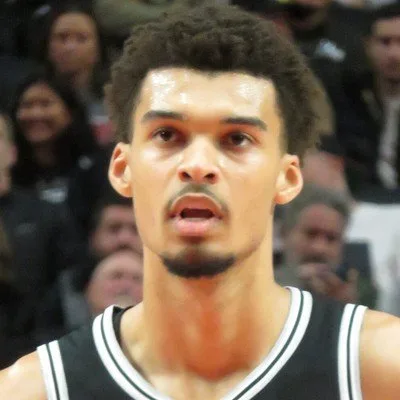 Victor Wembanyama41%YaTidak
 Luka Doncic40%YaTidak
The restriction on permissible markets is the clause traders will feel most directly. The league can now wave off contracts it considers objectionable, which narrows what any preferred exchange is allowed to list on an NBA event, a constraint that did not formally exist before. In return, the contracts that do list carry the league's data and its blessing, which tends to deepen liquidity and tighten pricing as more participants treat the market as authoritative.
Why this matters for Polymarket
For Polymarket specifically, the designation is a milestone in a long legitimacy campaign. The platform built its name on political and cultural contracts settled on a public blockchain, and it has spent the past year moving from the regulatory margins toward the mainstream. Standing beside Kalshi as a league-preferred exchange, with NBA data and branding attached, is as close to an establishment seal as the category offers.

It also raises the stakes on everything the platform does next. A preferred exchange carrying official NBA data is held to the league's integrity rules in a way a fringe venue never was; the blessing and the obligations arrive in the same envelope.
The useful way to read October 26 is that the argument about American sports prediction markets has moved. It is no longer whether these contracts should exist, but who writes their rules, and the NBA just answered for itself: the federal regulator, the league, and a named pair of exchanges, with the Supreme Court still to rule on whether that answer is even allowed to stand. The leagues once treated these markets as a threat to be kept outside the building. The NBA just handed two of them a key and a rulebook.


