Byron Donalds, Ashley Moody and James Uthmeier won Florida's governor, Senate and attorney general races on November 3, 2026, completing a Republican sweep of the statewide ballot. Prediction markets had called it: on Polymarket, a crypto-based exchange where traders buy and sell contracts on real-world outcomes, and on Kalshi, its federally regulated US rival, all 3 Republicans were priced as favorites the night before the vote, even though public polls rated the races as tossups.
The markets were sharp, not clairvoyant. The same traders who nailed 3 candidate races badly misread a property-tax question on the same ballot: Polymarket gave Amendment 3 only about a 30% chance of passing, and it passed with roughly 60.72%.

3 races, 3 correct calls
Moody, an appointed US senator who took over Marco Rubio's seat after serving as Florida's attorney general, held the seat in a special election, beating the Democrat Angie Nixon by roughly 51.0% to 47.9%, with about 4,180,497 votes. Nixon had won an August 18 primary upset to claim the nomination; on the night she did, Moody's "Yes" contract was already trading at 91 cents.
By the eve of the election, Polymarket priced Moody's win at 88 cents and Kalshi at 85, an implied probability above 80%. The books were almost as confident on the other two races.
Donalds, a US representative from Naples reported as the first Black Republican elected governor of Florida, won the governor's race over David Jolly, a former Republican congressman running this time as a Democrat, by about 50.1% to 48.6% (4,105,461 votes to 3,986,701). The night before, Donalds traded at 63 cents on Polymarket and 61 on Kalshi, with Jolly at 39.
Uthmeier, the sitting attorney general whom Governor Ron DeSantis appointed in February 2025, won his first full term over Jose Javier Rodriguez, a former Miami-Dade state senator, by about 51% to 49%. Polymarket had him at 71 cents and Kalshi at 70.
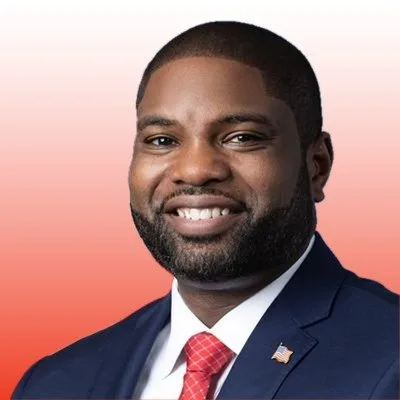 Byron Donalds (R)99%YaTidak
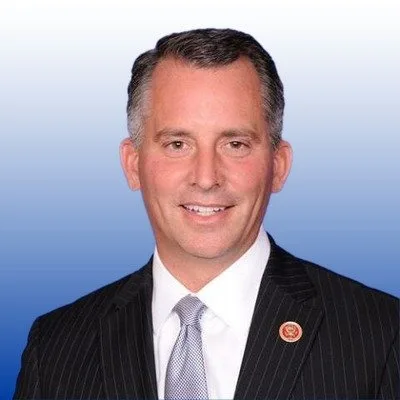 David Jolly (D)1%YaTidak
What the polls saw, and what the market saw
The gap that makes Florida a clean case study is the one between those contract prices and the published polling. Surveys had the 3 statewide races inside the margin of error, genuine tossups on paper. The markets did not hedge: they priced Republicans as the side to beat in each, and in each the Republican won. For an audience watching whether prediction-market prices beat traditional polls, this was 3 for 3 in the markets' favor.
That is the recurring argument for these venues. Yesha Yadav, an associate dean at Vanderbilt University Law School, said ahead of the count that election day "does, in fact, represent a real test for the new wave of prediction markets." Sean Patrick Maloney, who runs the industry's Coalition for Prediction Markets, pitches them as a signal in "a world full of chaos and biased news sources." Florida handed that case a good night.
The one the market got wrong
Then came the asterisk. Amendment 3 asked Florida voters to raise the non-school homestead exemption, the slice of a primary residence's value shielded from property tax, to $150,000 in 2027 and $250,000 in 2028. Polymarket priced its chance of clearing Florida's 60% approval threshold at only about 30%. It cleared it, passing with roughly 60.72%.
That is not a rounding error; it is the market on the wrong side of the line. The pattern inside one ballot is the tell: the same crowd that read 3 partisan candidate races correctly could not price a tax measure, where there is no party label to anchor to and far less liquid, well-informed money taking a view. It looks structural, not like a one-off.
A correct call is not a precise one
Even the wins carry a caveat. Donalds's 63-cent price implied a comfortable lead, yet he won by about 1.5 points. A market can name the right winner and still badly misjudge how close the race will be, and the governor's race finished far tighter than its headline number suggested.
The money saw that late. The analytics outlet The Action Network noted that between October 24 and November 2, Jolly's implied chance of winning nearly doubled, climbing from around 19% to 38.3%, while Donalds slid from roughly 81% to 61.7%, a drop of almost 20 points. "Donalds still holds the advantage," the firm wrote, "but the sharp narrowing of the gap highlights just how significantly market expectations have shifted ahead of Election Day." The contract moved toward the real result; it just never got all the way there.
The number behind the test
Florida was one state inside a far larger experiment. More than $1.48 billion moved through prediction markets on the 2026 midterms, roughly $1.33 billion of it across Kalshi's full slate of midterm contracts and about $145 million in Polymarket's congressional markets, by the count of the Anti-Corruption Data Collective, a Washington nonprofit that tracks political-market volumes and manipulation.
At that scale the national read ran the other way: by the afternoon of November 3, the analytics firm BetInt had the markets giving Democrats a 94% chance of taking the House and 74% of taking the Senate, a reminder that a Republican sweep of Florida's statewide offices is not a statement about the whole map.
 Democratic Party99%YaTidak
 Republican Party1%YaTidak
 Democratic Party99%YaTidakRepublican Party1%YaTidak
The people who build these markets are the first to warn against reading them as fate. Carlos Hardenberg, a portfolio manager at MCP Emerging Markets, grants that the prices are useful but adds a line that Florida just proved: "they should not be confused with certainty." The same markets that outperformed the polls in Florida have missed badly elsewhere, including Brazil's recent presidential race.
What Florida actually settled
So the scorecard from Florida is specific and worth holding onto: the markets beat the polls where there was a party to trade on, and lost to them where there was not. 3 partisan races, 3 correct favorites; a tax amendment badly mispriced; a governor's race called right and sized wrong. The lesson for anyone watching Polymarket's prices as a crystal ball, in Florida or anywhere its election contracts trade, is narrower than the "markets beat polls" headline: the crowd is at its best reading a horse race with a red team and a blue team, and at its worst the moment the ballot stops naming parties and starts asking about your tax bill.