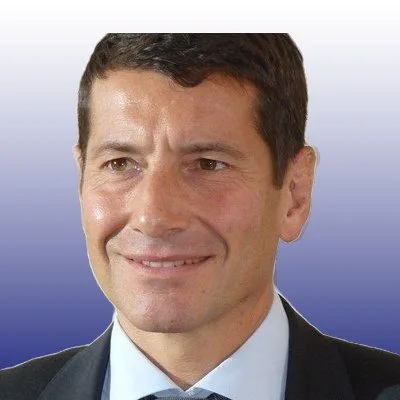
پلیمارکت traders now rank Rene Haas, the chief executive of British chip designer Arm, as the most likely person to become Nvidia's next chief executive, one week after co-founder Jensen Huang resigned from the company effective immediately. In a snapshot taken at 19:35 Moscow time on November 17, 2026, the "Next CEO of NVIDIA?" market priced Haas at 18%, Nvidia vice-president Ian Buck at 15%, Huang himself at 13% and Tim Cook at 4%.
Total positions on the contract had crossed $4.7 million, making it one of the most heavily traded corporate-succession questions پلیمارکت, the crypto-settled prediction market, has ever listed. The question matters well beyond Silicon Valley: Nvidia is one of the largest foreign technology employers in Israel, with thousands of research and development staff and the former Mellanox networking business folded into it, so whoever inherits the chief executive's chair will set the direction for a workforce that stretches from Santa Clara to Yokneam.

 Mike Gallagher1%بلهخیر
Who the traders are backing
Haas is a logical name for the crowd to resolve on. He runs Arm, the Cambridge company whose instruction-set designs sit inside almost every smartphone, and he spent seven years at Nvidia before taking the top job there, giving him a rare mix of outsider independence and insider familiarity. Traders had committed about $256,400 to his line.
Behind him sits Ian Buck, a Nvidia vice-president who helped create CUDA, the software platform that turned the company's graphics chips into the engines of the artificial-intelligence boom. His line carried about $467,600, more than Haas's, even though his implied probability was lower, a reminder that volume and price move independently in a market with many possible outcomes.
Then there is Tim Cook, the executive who has been the public face of Apple for well over a decade, whom President Trump publicly described as a strong candidate for the role. Traders were unconvinced, pricing him at just 4% while still staking roughly $472,000 on the question. Huang's own line, reflecting the possibility that the board reverses course and brings him back, sat at 13% and carried by far the most money of any candidate, about $2.583 million.

Why Huang is gone
The vacancy the market is pricing opened on November 12, 2026, when Huang resigned as president, chief executive and director of Nvidia, effective immediately. The company's filing with the US Securities and Exchange Commission named chief financial officer Colette Kress as interim chief executive and Harvey C. Jones, a longtime director, as Nvidia's first-ever board chair.
Nvidia gave no reason for the departure. The filing that confirmed the transition is silent on why a founder who had led the company for more than three decades, and turned it into one of the most valuable businesses on Earth, would leave overnight. That silence is part of why the prediction market filled so quickly: with no official explanation, traders are pricing a genuinely open question.
Reporting since the resignation, none of it confirmed by Nvidia, has tied the exit to a personal scandal involving Huang's relationship with a woman said to have links to Chinese intelligence. China's foreign ministry has dismissed that account as slander, and Nvidia's own disclosure stops at the fact of the resignation, endorsing no explanation at all.
The contracts on a comeback
Huang's name appears twice in پلیمارکت's Nvidia markets, and the two questions should not be confused. One is the succession contract, where his 13% reflects the chance the board hands him back the chief executive title. A separate set of contracts prices his return to any official Nvidia role by fixed dates: 4% by November 30, 2026, 10% by the end of December 2026 and 35% by the end of 2027.
The money behind those lines is lopsided in a way that looks counterintuitive. The nearest-term question, a return within weeks, carried about $1.517 million; the end-of-2026 question about $1.765 million; and the longest-dated question, a return by the close of 2027, only about $246,600. In a thin market, where a handful of large positions can set the price, that pattern says more about which questions caught traders' attention than about any settled view of Huang's future.
One snapshot, not a verdict
Any single reading of this market should be treated as a timestamped photograph rather than a stable ranking. The order books are thin, and the implied probabilities have swung hard from day to day. In the hours after Huang's resignation, traders had Buck above 30% and out in front; by the middle of the following week, Haas had climbed toward 29% before the November 17 snapshot settled him at 18%. The leader has changed more than once, and the four named candidates together account for only about $3.78 million of the book, with the rest spread across other names the market is still weighing.
That volatility is the point, not a flaw. A prediction market is a market, and each price is the crowd's current estimate of a probability, updated every time someone takes a position. When new information is scarce, as it is while Nvidia's board deliberates behind closed doors, those estimates move quickly and disagree with one another. The 18% on Haas is what the market thought at 19:35 Moscow time on a Tuesday, not a forecast carved in stone.
What a permanent pick would resolve
For traders holding these contracts, the resolution event is simple and binary: Nvidia's board names a permanent chief executive, the matching line pays out at $1 a share, and the rest expire. For everyone else, the naming will answer a sharper question than the odds can. If the board reaches outside for Haas, it signals a clean break and a preference for Arm-style discipline. If it elevates Buck or another insider, it signals continuity and a defense of the CUDA-centered strategy that built the company. If it somehow restores Huang, it rewrites the story of why he left at all.
Until then, the people of Yokneam and Tel Aviv, whose paychecks and roadmaps depend on decisions made in Santa Clara, can watch the same contract the traders are watching. The market cannot tell them who Nvidia's board will choose, but the November 17 book makes one thing unmistakable: the crowd has staked $2.583 million on Jensen Huang reclaiming the chair he just vacated and only $256,400 on Rene Haas, the 18% favorite, actually getting it. In the "Next CEO of NVIDIA?" market, the single best-funded outcome is still the man who walked out, and the clean-break candidate at the top of the board leads on probability while trailing almost everyone on conviction.