


Democrats won control of both chambers of Congress in Tuesday's midterm elections, but four marquee races were still uncalled on Wednesday, November 4, 2026, and Polymarket traders had already moved millions of dollars onto each outcome. Two Senate seats, in Alaska and Mississippi, and two governorships, in Alaska and Kansas, remained too close to call, with a Democrat narrowly ahead in all four and the official counts stretching into late November and early December.
That gap, between a result the networks will not yet project and a lead one side already holds, is exactly where a prediction market lives. On Polymarket, the crypto-settled platform where each race trades as a pair of yes/no contracts that pay out one dollar per winning share, the four contests were repricing minute by minute as fresh batches of ballots landed. The platform had already priced the Democratic candidates as heavy favorites in the two Senate races. What it cannot do is close the contracts, because none of these counts is finished, and each one ends on a different legal clock.

Alaska: a 626-vote lead the count cannot yet confirm
In Alaska, Mary Peltola, the Democrat and former U.S. House member now challenging for the Senate, led Republican Senator Dan Sullivan by roughly 626 votes in preliminary returns: 102,701 to 102,075, or about 48% to 47.7%. Sullivan has held the seat since 2015, and his own words on election night set the tone for what followed. "We're gonna have a long night, we're probably gonna have some long weeks," he told supporters. Peltola, for her part, framed the race as a fight over who the Senate answers to: "We can wrestle our country back. We can get our country back from corporate greed."
The margin is thin enough that the quirks of the ballot matter. Two minor candidates drew the remaining votes, among them a second man named Daniel J. Sullivan, who took about 3,583, a name coincidence that looms unusually large in a race decided by a few hundred. By 12:50 UTC, Polymarket priced Peltola near 87% and Sullivan near 13%, on about $4.73 million of volume, making Alaska the most heavily traded of the four contracts.
Why Alaska will not resolve until November 18
Alaska does not count like most states, and that is the single biggest reason the contract stays open. The state uses ranked-choice voting, tabulating a top-four field through elimination rounds rather than a single plurality tally. If no candidate clears 50% on the first count, the lowest finishers are dropped and their voters' second choices are redistributed until someone passes the line. Peltola's roughly 48% first-round share sits just under that threshold, which means an elimination round is possible rather than guaranteed.
The calendar is fixed and slow. The Division of Elections plans interim updates on November 10 and 13, the official ranked-choice tabulation on November 18, and a target certification date of November 25. A recount can be requested only within five days of certification. In practice, that means a lead reported on election night in Alaska is a provisional reading of a process that will not produce a legal result for three more weeks, and the Polymarket price is tracking that long runway, not a finished count.
Mississippi: 43 votes, a historic first, and no automatic recount
Mississippi was closer still. Scott Colom, the Democrat and local district attorney, led Republican Senator Cindy Hyde-Smith by roughly 43 votes, 462,821 to 462,778, in a count taken around 4 a.m. Eastern before Hinds County, home to the capital, Jackson, paused its tally overnight with affidavit ballots still outstanding. That margin has been a moving target through the night, reported variously between 28 and about 50 votes depending on the timestamp, which is itself a reason the market keeps re-rating the race.
The stakes carry weight beyond the arithmetic: if Colom holds on, he would be the first Black senator elected by popular vote in Mississippi. The path to a final number is unusually narrow. The state holds no runoff, so a plurality winner takes the seat, and it has no automatic recount and no candidate-initiated recount. The only way to a recount is for a judge to order one, which raises the bar for any challenge well above a simple request.
By 14:06 UTC, Polymarket priced Colom near 83% and Hyde-Smith near 17%, on about $4.11 million of volume, the second-busiest of the four contracts and a sign that traders read the overnight pause and the outstanding affidavit ballots as unlikely to flip the order.

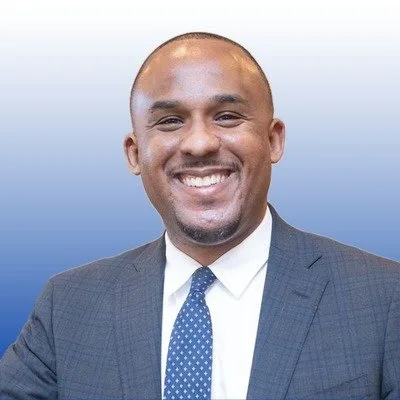 Scott Colom (D)99%DaNu
 Cindy Hyde-Smith (R)1%DaNu
Alaska's governor race rides the same calendar
Alaska's open governor's race is the quieter of the state's two uncalled contests, with Democrat Jonathan Kreiss-Tomkins leading in a partial count. It is bound to the same machinery as the Senate race: the November 18 ranked-choice tabulation and the November 25 certification target. For traders, that means the two Alaska contracts share a resolution date and a single source of delay, the slow, deliberate way the state counts, rather than any dispute over the ballots themselves.
Kansas: the first clock to run out
Kansas is where the next hard deadline falls. In the open governor's race, Democrat Cindy Holscher led Ty Masterson, the Republican president of the Kansas Senate, by about 5,557 votes, roughly 50.3% to 49.7%, with about 98% of the count in and some 24,000 ballots still outstanding. Unlike Alaska, nothing exotic is holding up the result; it is simply a matter of ballots still arriving and being processed.
Two rules govern what happens next. Mailed ballots postmarked by Election Day count as long as they arrive within the grace period, which ends Friday, November 6, so Holscher's lead has to survive that final batch. A recount is available, but the state covers the cost only if the margin falls within 0.5%, a threshold Holscher's current lead sits outside. The State Board of Canvassers then has until December 1 to certify, which makes Kansas both the first of the four races to face a decisive deadline, on Friday, and the last to reach formal certification.
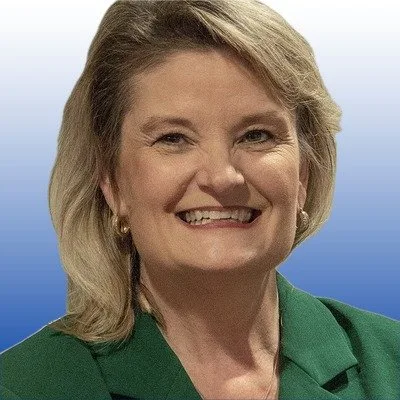 Cindy Holscher (D)99%DaNu
 Ty Masterson (R)1%DaNu
Four counts, four clocks
Put the four races side by side and the picture is not one of chaos but of four separate timetables running at once. Kansas stops taking mail on November 6. Alaska tabulates its ranked choices on November 18 and aims to certify on November 25. Kansas certifies by December 1. Each date is a moment when new information, or a legal finality, can land, and each is a moment when one of these contracts can lurch or resolve. That staggering is precisely why the contracts have stayed open and liquid rather than snapping shut on election night.
It also explains why the broader market for how many Senate races would finish inside a tight margin stayed active well past the polls closing. In a cycle where Democrats had already clinched both chambers, the remaining drama was concentrated in a handful of seats decided by dozens or hundreds of votes, and that is where the trading went.

What the contracts are really pricing
So the real contest over these four seats is not about who leads; in all four, a Democrat already does. It is about whether a few hundred trailing ballots and the machinery of certification can erase a lead measured in dozens of votes in Mississippi and a few thousand in Kansas. The first test comes Friday, November 6, when Kansas stops accepting mailed ballots; the last comes December 1, when its canvassers must certify. Between those dates sit Alaska's ranked-choice tabulation on November 18 and its certification on November 25. For these seats, in other words, election night is a 27-day event, and the Polymarket contracts are the only scoreboard that stays lit for the whole of it.


